This page contains affiliate links. Please read our disclosure for more info.
Akan Mashu National Park is a beautiful wilderness reserve in eastern Hokkaido, far away from the typical tourist trail in Japan.
You’ll find pristine caldera lakes, active volcanoes, ancient forests, and natural hot springs. It’s home to settlements of Ainu, the indigenous people of Japan, and wildlife such as brown bears and foxes (we only saw the latter).
The large park is divided into two areas. The smaller, western side is home to Lake Akan and its hot spring resort. It’s an hour’s drive to the eastern side, which includes Lake Kussharo and Lake Mashu.
We spent 5 nights at Lake Kussharo exploring the national park. We swam in the lake, canoed down a river, soaked in hot springs, got up close to volcanic activity, and did one of the best hikes of our lives for incredible views of Lake Mashu.
In this Akan Mashu National Park travel guide, I share our favourite activities, where we stayed, and how to get there. You’ll find a map at the end.
This post focuses on summer activities as we visited in late June. Winter looks beautiful, and you can still do many of these activities, but it’s a different experience with deep snow and sub-zero temperatures.
Contents
- Where is Akan Mashu National Park?
- Things to Do in Akan Mashu National Park: Lake Mashu Area
- Things to Do at Lake Kussharo
- Lake Akan
- Where to Stay in Akan Mashu National Park
- Map of Akan Mashu National Park
- Is Akan Mashu National Park Worth Visiting?
- More Japan Tips
Where is Akan Mashu National Park?
Akan Mashu National Park is located in Hokkaido, a large region and island in the far north of Japan.
The park is in the remote eastern side of Hokkaido, a 5-hour (350km/ 217 mile) drive from the regional capital Sapporo and over 1400km (870 miles) north of Tokyo.
The easiest way to explore the park is by car, as public transport is very limited.
We visited Akan Mashu as part of a Hokkaido summer road trip. It was a 3-hour drive from our previous stop, Sounkyo Onsen, to Lake Kussharo, and 4.5 hours to our next destination, Biei.
We flew into Asahikawa Airport (from Tokyo Haneda on Japan Airlines), which worked well for our itinerary, but it’s around a 4-hour drive to the park. We rented a car at the airport using Booking Car Rentals.
Kushiro Airport and Memanbetsu Airport are the nearest airports to Akan Mashu National Park, both about an hour away.
Things to Do in Akan Mashu National Park: Lake Mashu Area
I’ve divided these activities in Akan Mashu National Park around the three major lakes: Mashu, Kussharo, and Akan.
If you want to see how we combined the various destinations, see our Hokkaido Itinerary.
Here are some of the best things to do at Lake Mashu.
1) Admire the View at Lake Mashu Observatory No 1
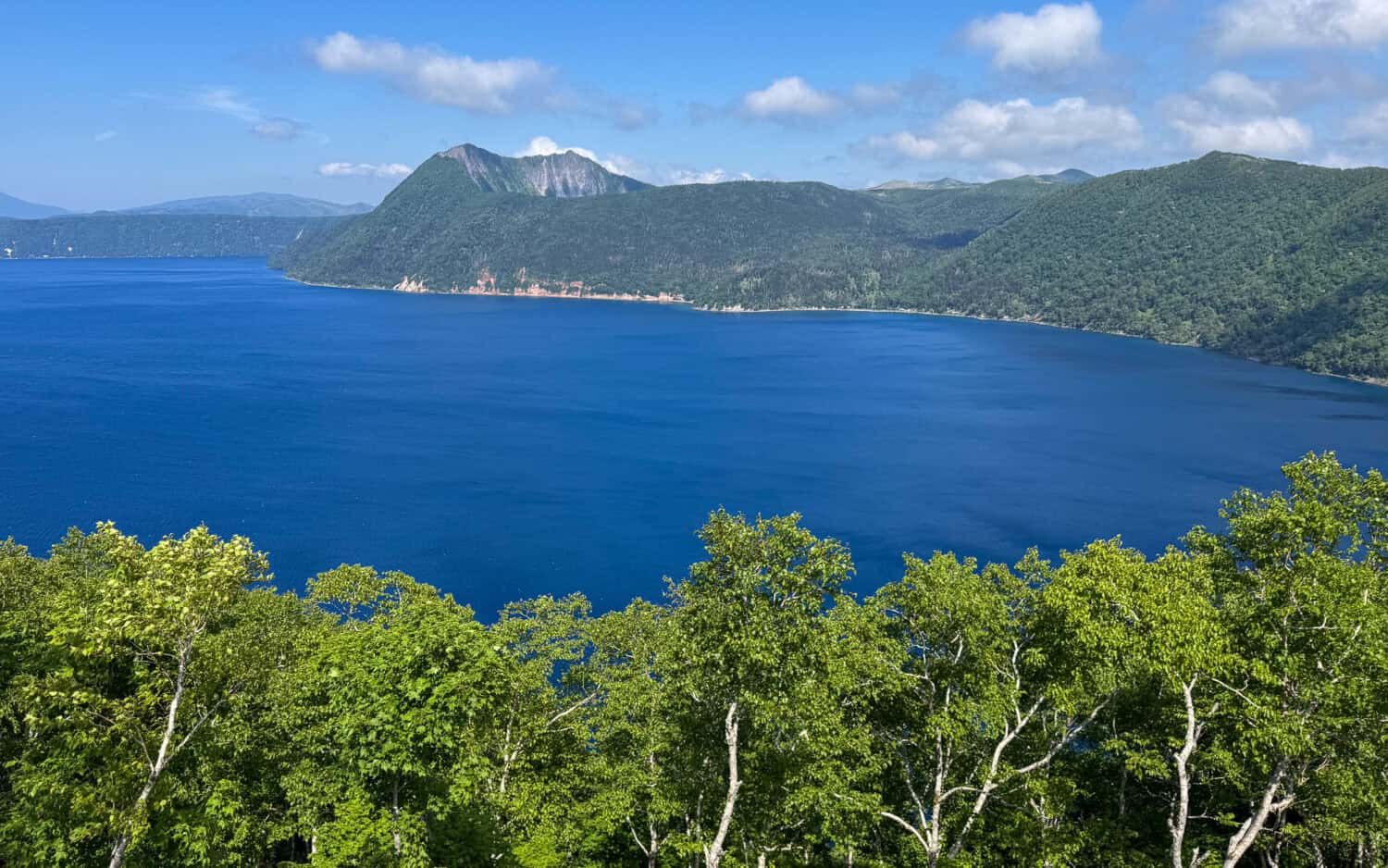
Lake Mashu is a crater lake with some of the clearest water in Japan (perhaps the world) because no rivers feed into it. Its sapphire hue is known as “Mashu Blue”.
The Ainu people call this sacred lake Kamuinupuri, which means “Lake of the Gods.”
You can’t go down to the water, but you can admire it from above at several observation decks.
Lake Mashu Observatory No. 1 is the most popular—the views are stunning, with comfy seating on the outdoor terrace to enjoy them. There’s also a cafe, gift shop, and toilets.
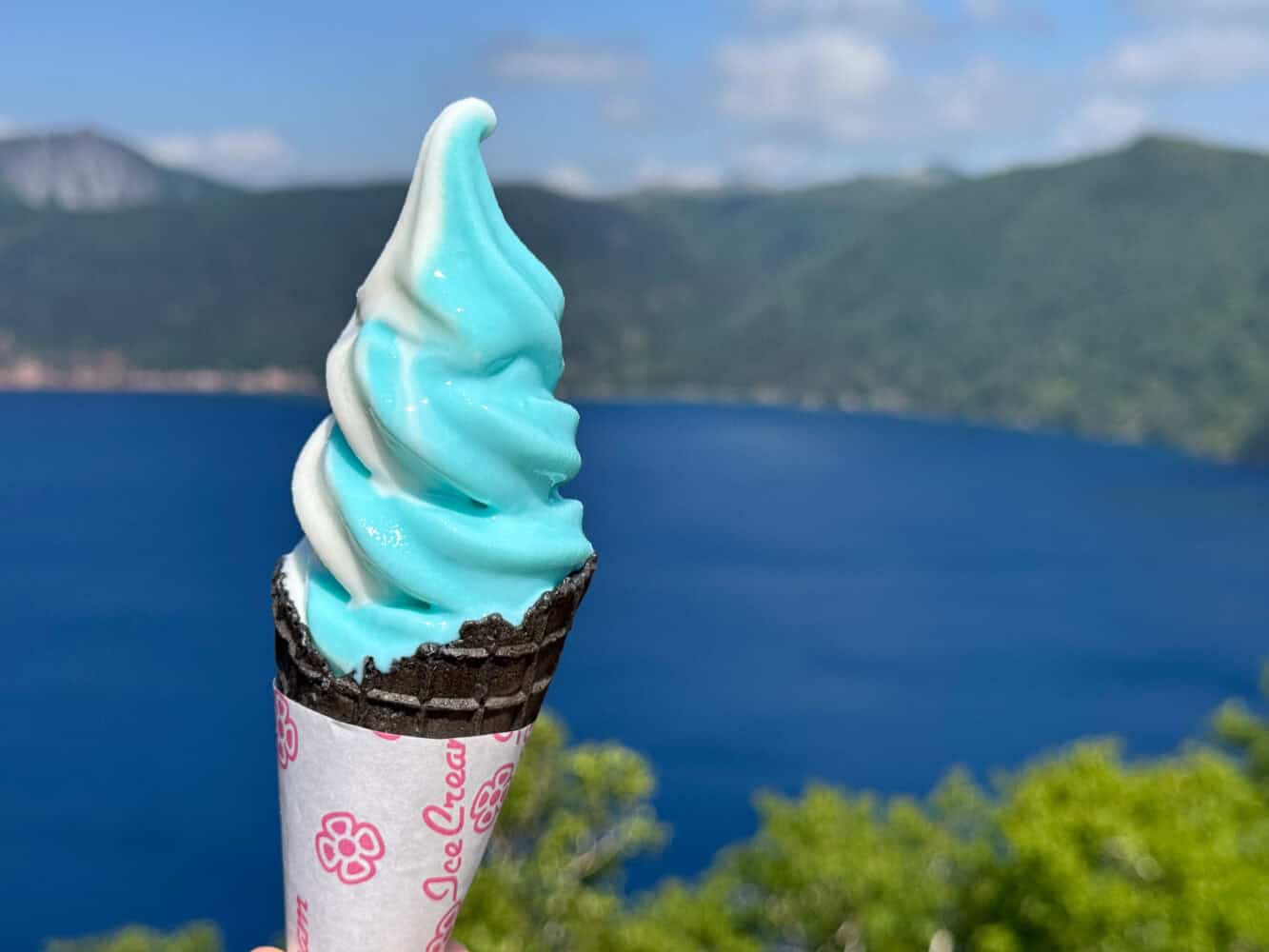
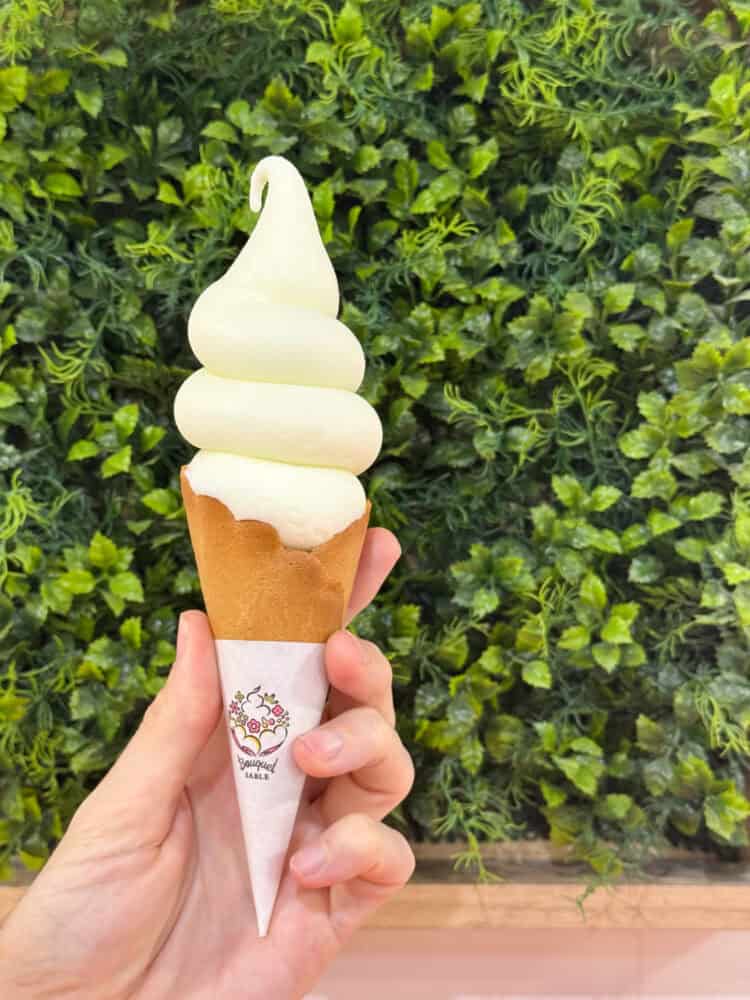
We enjoyed the Mashu Blue soft-serve ice cream. Other snacks include potato dumplings, grilled corn, and deep-fried potatoes.
Parking at Observatory No. 1 costs 500 yen (cash only) and includes same-day parking at Mt Io, a 20-minute drive away.
Lake Mashu is notoriously foggy, so we chose the sunniest day for our visit. When we woke up, we checked the webcam, and it was unfortunately shrouded in fog. Luckily, an hour later, it had cleared, so conditions can change fast.
2) Hike Mt Mashu for Astounding Views of Lake Mashu
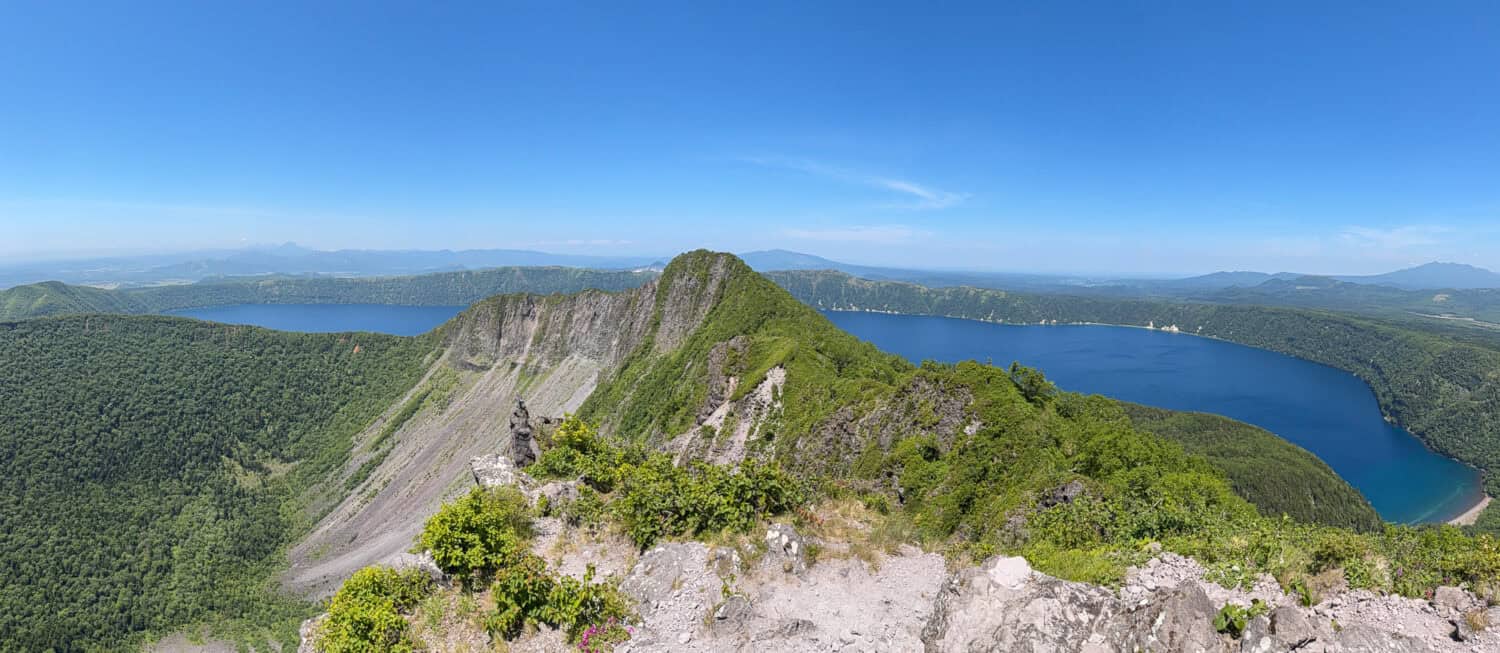
Our Hike Stats: 4.5 hours of walking (plus 1 hour of breaks), 14.4km (9 miles), 834 metres (2736 feet) elevation gain.
AllTrails Page: Mount Mashu.
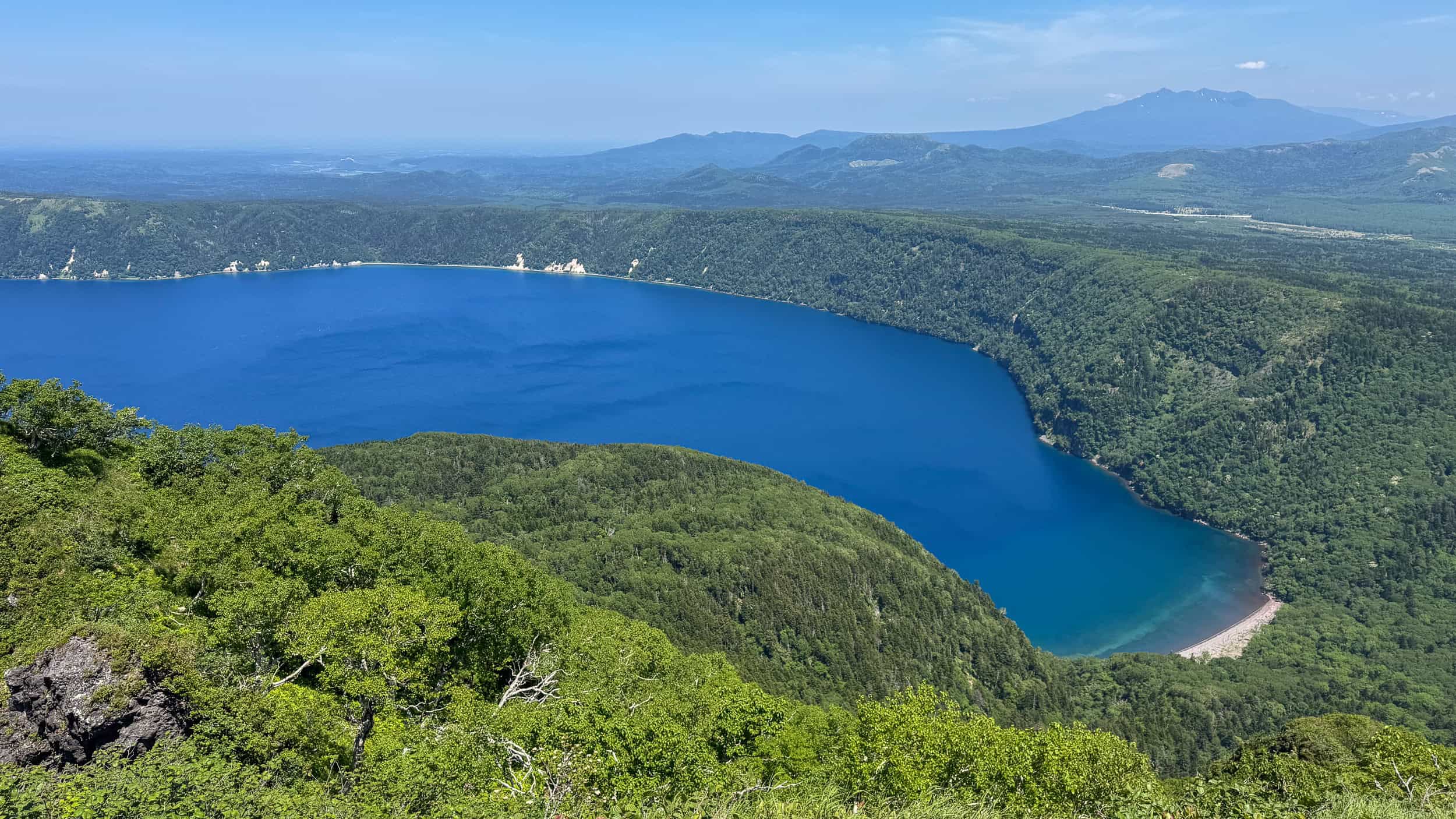
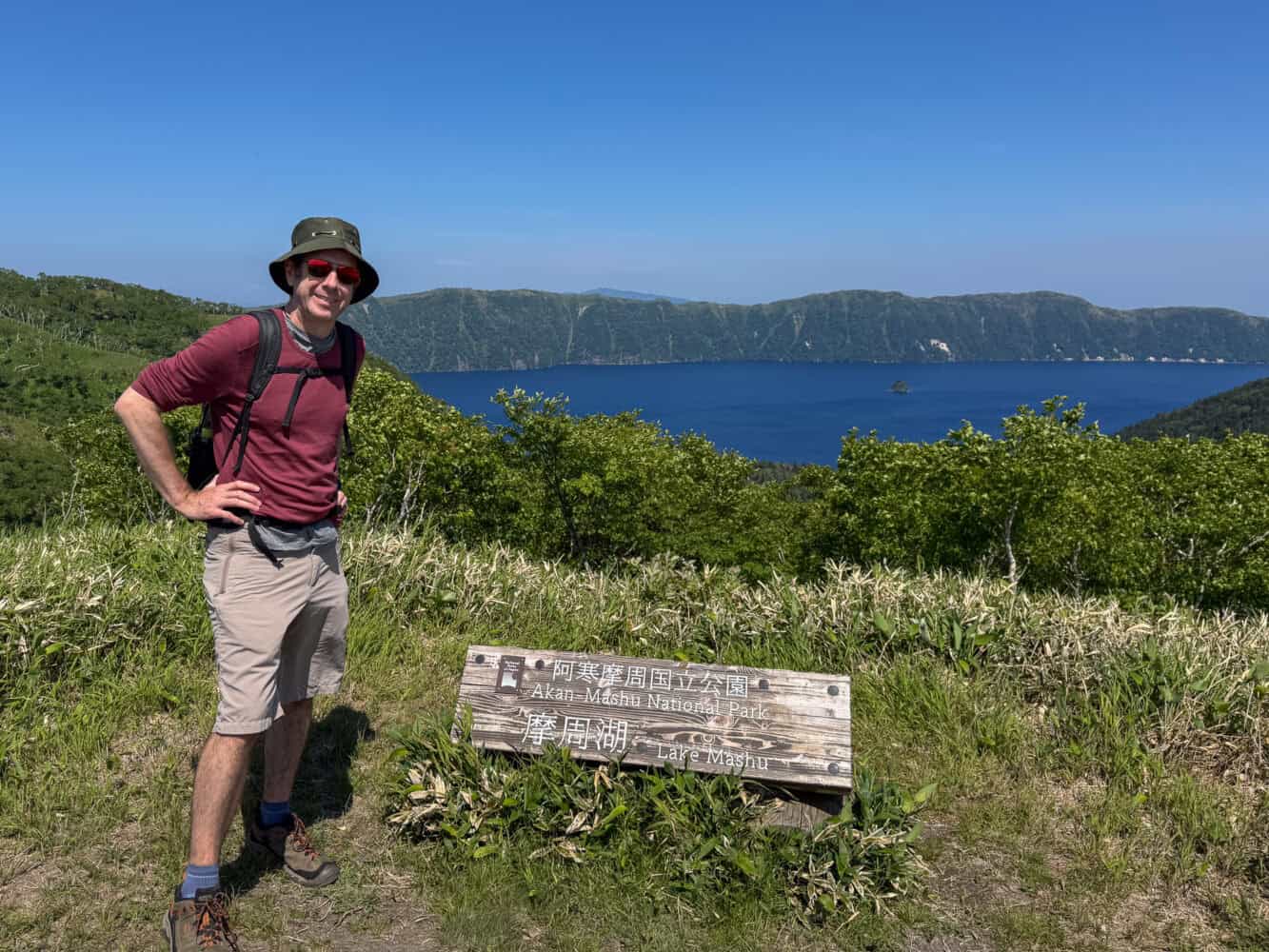
The Mt Mashu hike was our absolute favourite activity in Akan Mashu National Park—it helped that we had a glorious sunny day.
The trail to the highest peak on the rim of the Lake Mashu caldera starts at Observatory No. 1.
When we arrived at 8am, there was no one around. After signing the visitor book at the trailhead, we set off on the long hike to Mt Mashu (or Kamuinupuri is the Ainu name).
Rather than one long, steep ascent to the top, this hike starts more gently, with undulating hills through the forest and occasional lake views, then a climb for about 30 minutes.
It then opens up to expansive views of the lake and surrounding countryside and easier walking along the ridge.
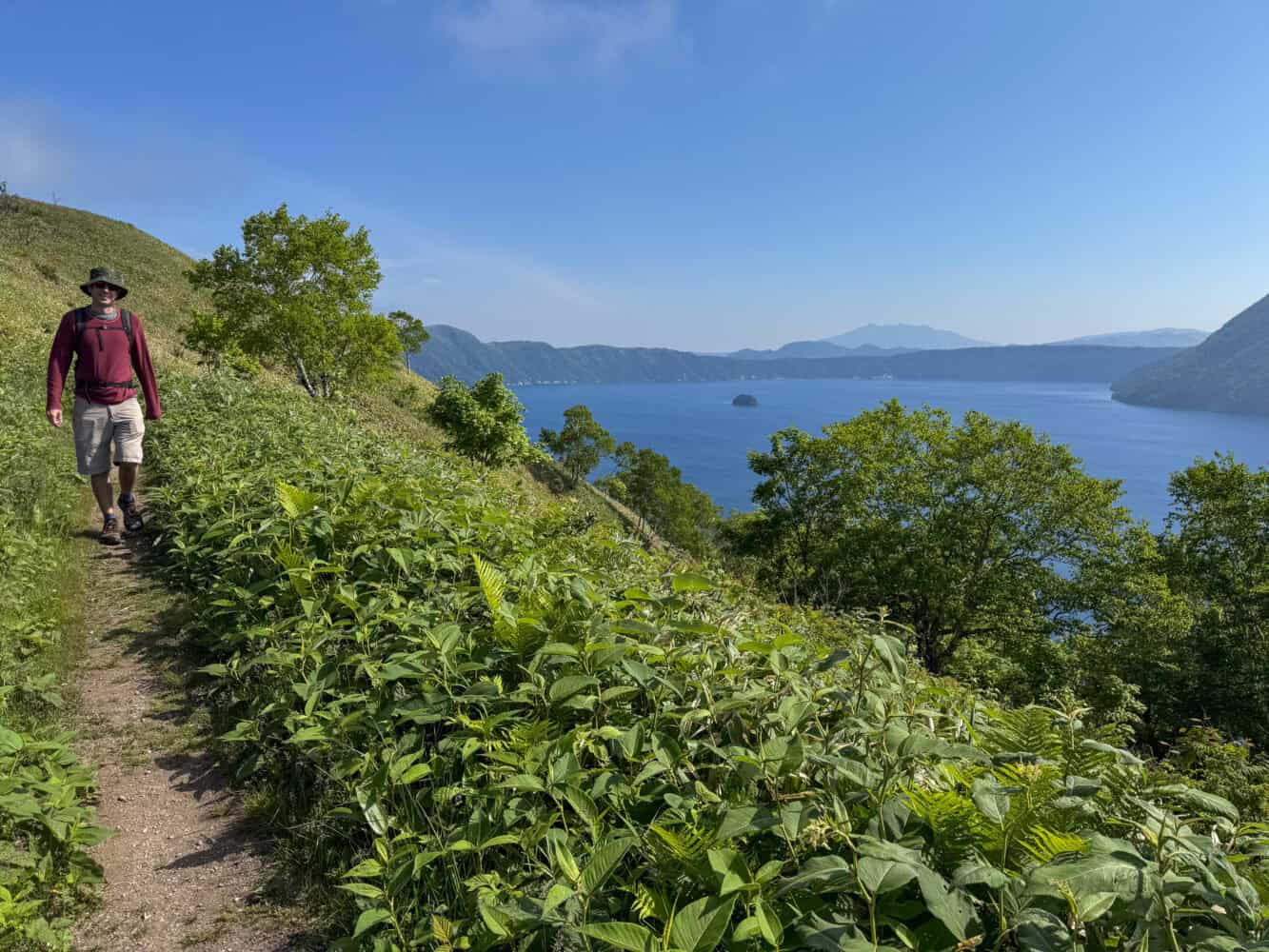
The final 40 minutes are the steepest, and the last 400 metres are up a narrow, steep, and rocky path, but it wasn’t too challenging.
It was absolutely worth it for the incredible views of the entire lake and down into the crater. Stunning!
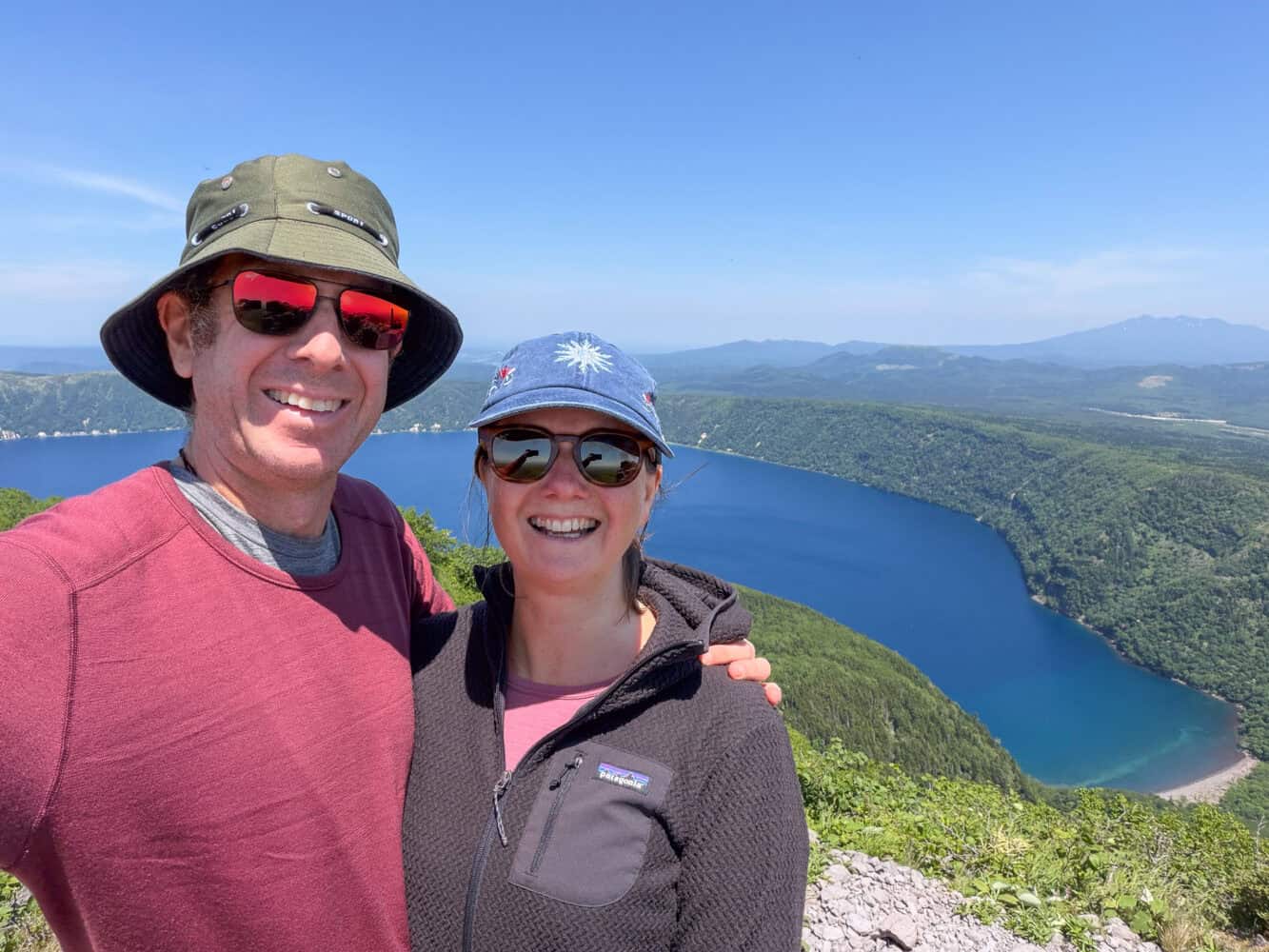
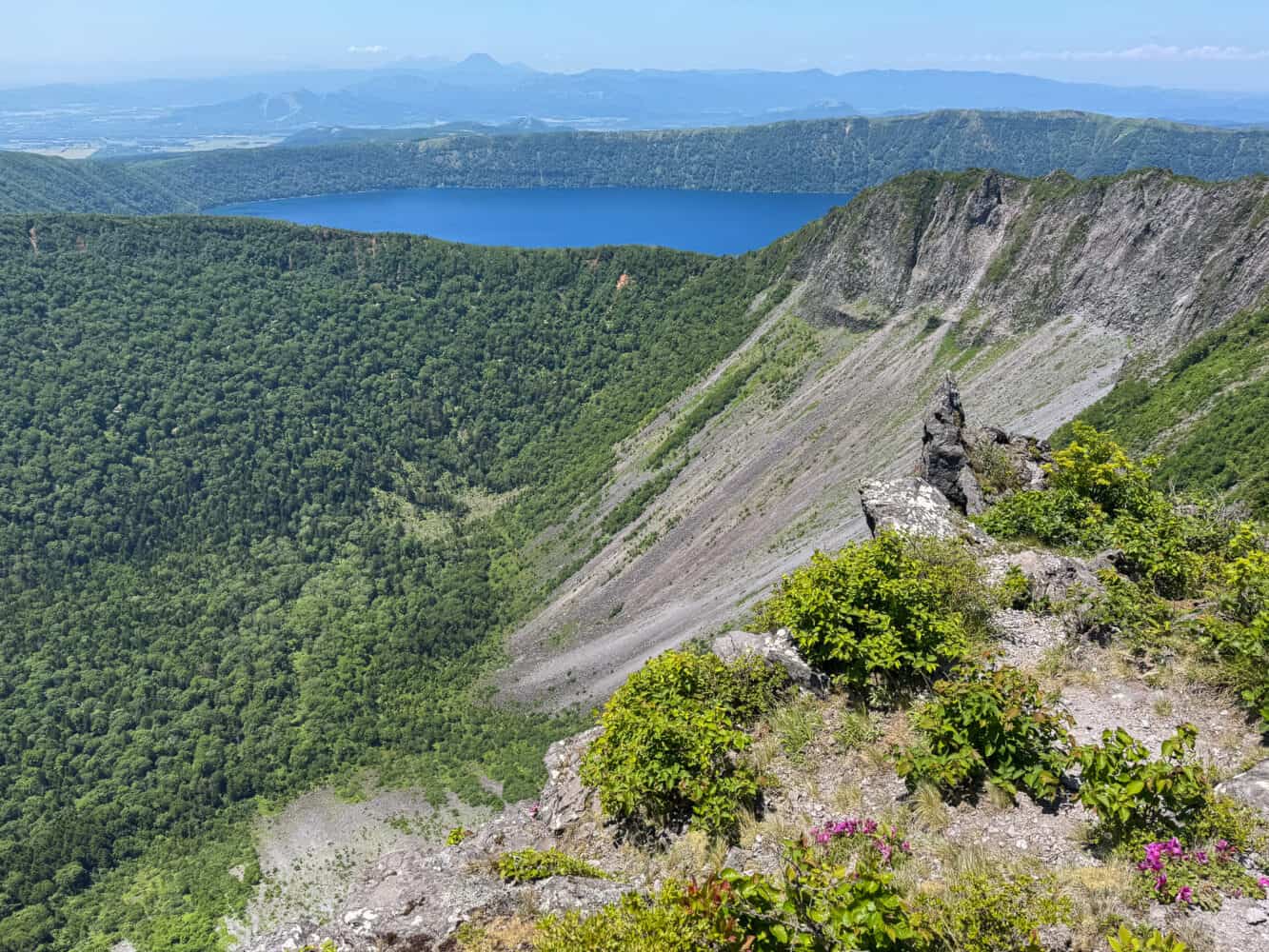
The return journey was actually the hardest for us. Those gentle undulations feel less gentle when you are going uphill on the way back after hours of walking.
There are a few picnic areas that are good for breaks, but no other facilities.
It was a truly wonderful day and a great way to enjoy Lake Mashu if you have a clear day and are up for a long hike.
We didn’t see anyone else until near the summit, so it was also a tranquil experience.
Bears are always a risk in this area, so add a bear bell to your backpack to warn them of your approach.
3) See the Fumaroles at Mt Io

Mt Io (Iozan) is an active volcano with geothermal activity.
It’s an easy, short stop—park at Mokmok (500 yen, cash only, also valid for parking at Lake Mashu Observatory No. 1 on the same day).
The visitor centre here has toilets, a souvenir shop, and good vanilla soft serve (you can also get it with an onsen egg!). There’s a nice indoor seating area with a view.
It’s a short walk to see steaming fumaroles, bubbling pools of boiling water, and yellow sulphur mounds.

Iozan means “Sulphur Mountain,” and until the 1970s, it was a sulphur mine. It still lives up to its name with an intense smell of sulphur (we had to wash our clothes after our visit!).
If you want a longer walk, the 5km (3 mile) Tsutsujigahara Nature Trail takes you to the visitor centre in Kawayu Onsen and back.
We only walked part of it, but the stone pines were a lovely-smelling contrast to the sulphur.

A bear had been seen 10 days before our visit, so take a bear bell (you can buy one in the shop).
Things to Do at Lake Kussharo
Lake Kussharo is the largest caldera lake in Japan, with a circumference of 57km (35 miles). The water is very clear, and it’s one of the best places in the park for swimming, canoeing, and hot springs.
4) Canoe on the Kushiro River
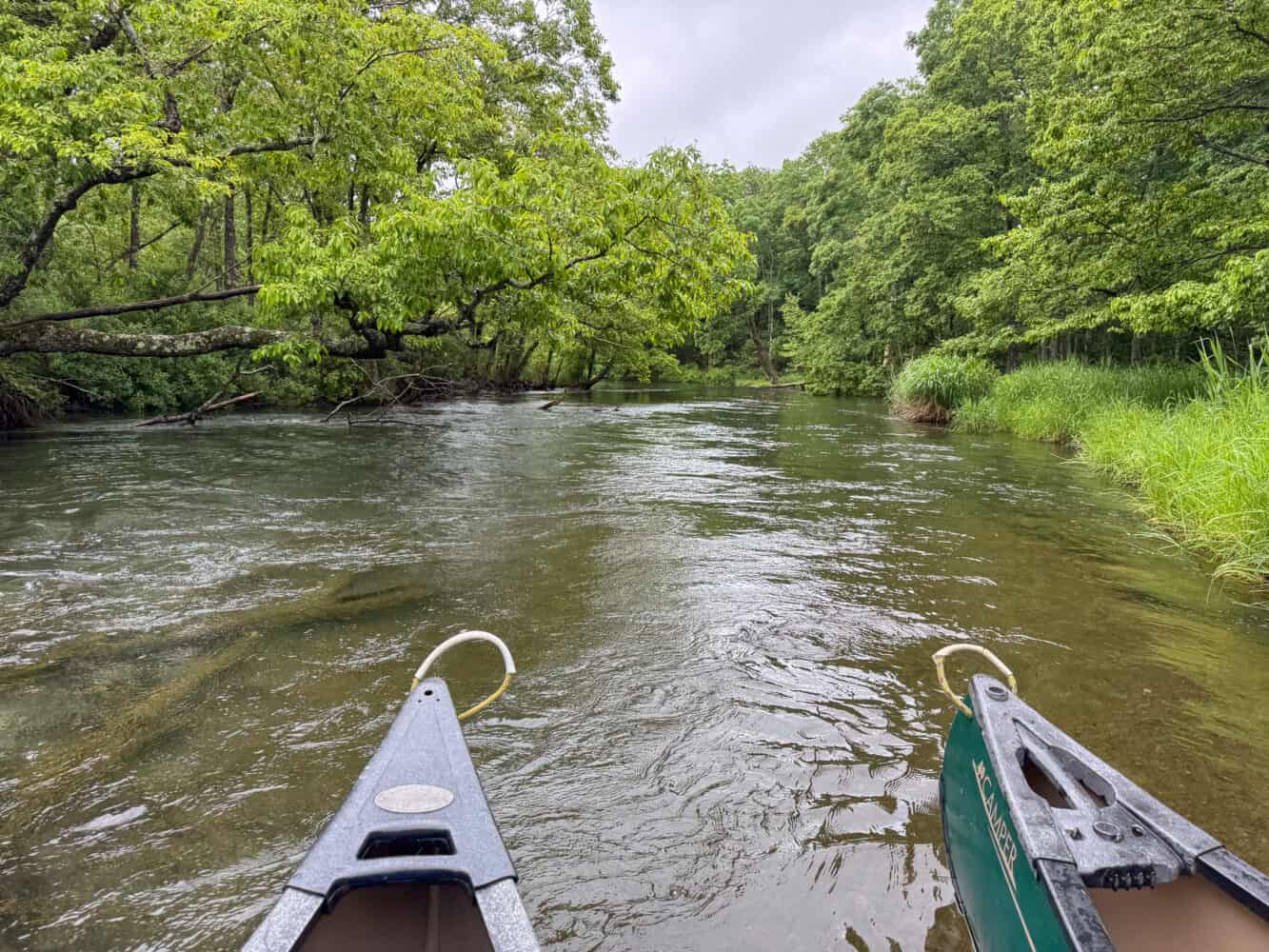
A close second for our favourite activity in Akan Mashu National Park was canoeing from Lake Kussharo down the headwaters of the Kushiro River.
The Kushiro River flows from Lake Kussharo to the Pacific Ocean, and the calm, pristine water is perfect for canoeing.
Unfortunately, I left it until two days before to book, and a couple of companies were already fully booked.
I wanted to do a longer tour but could only find a 90-minute canoe trip with Kussharo Eco Tours (you’ll need to translate their website from Japanese).
The private trip cost 8000 yen each (cash only). I booked via email, and they spoke English.
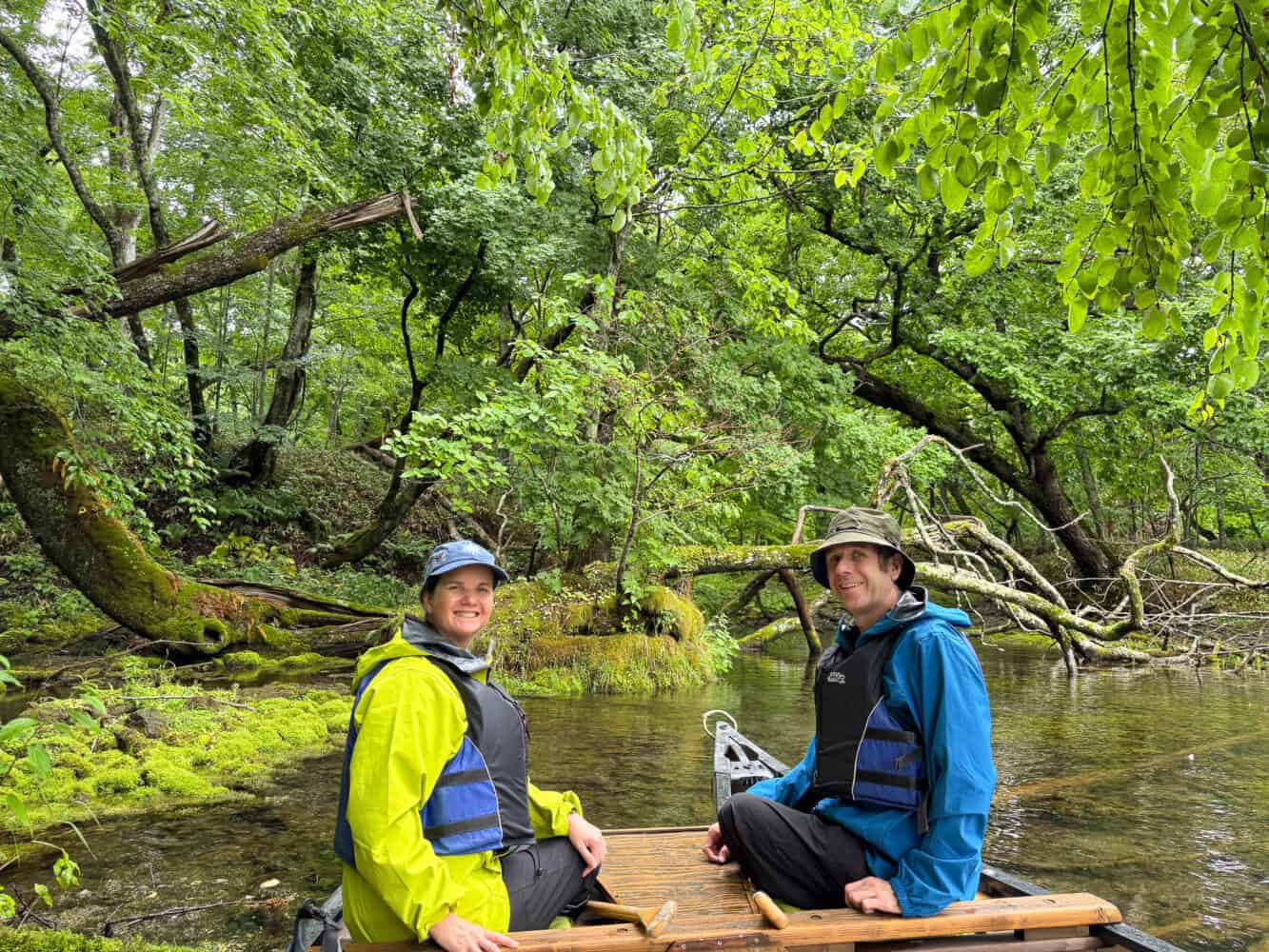
We ended up really happy with our choice. Our guide Sachi gave us lots of interesting information about the area and pointed out birds and fish (including teeny baby salmon) on the way. We even saw some deer.
It’s more of a sightseeing trip than exercise as you glide downstream with no need to paddle. The guide controls the canoe, and we only did a little bit of paddling on the lake before heading down the river.
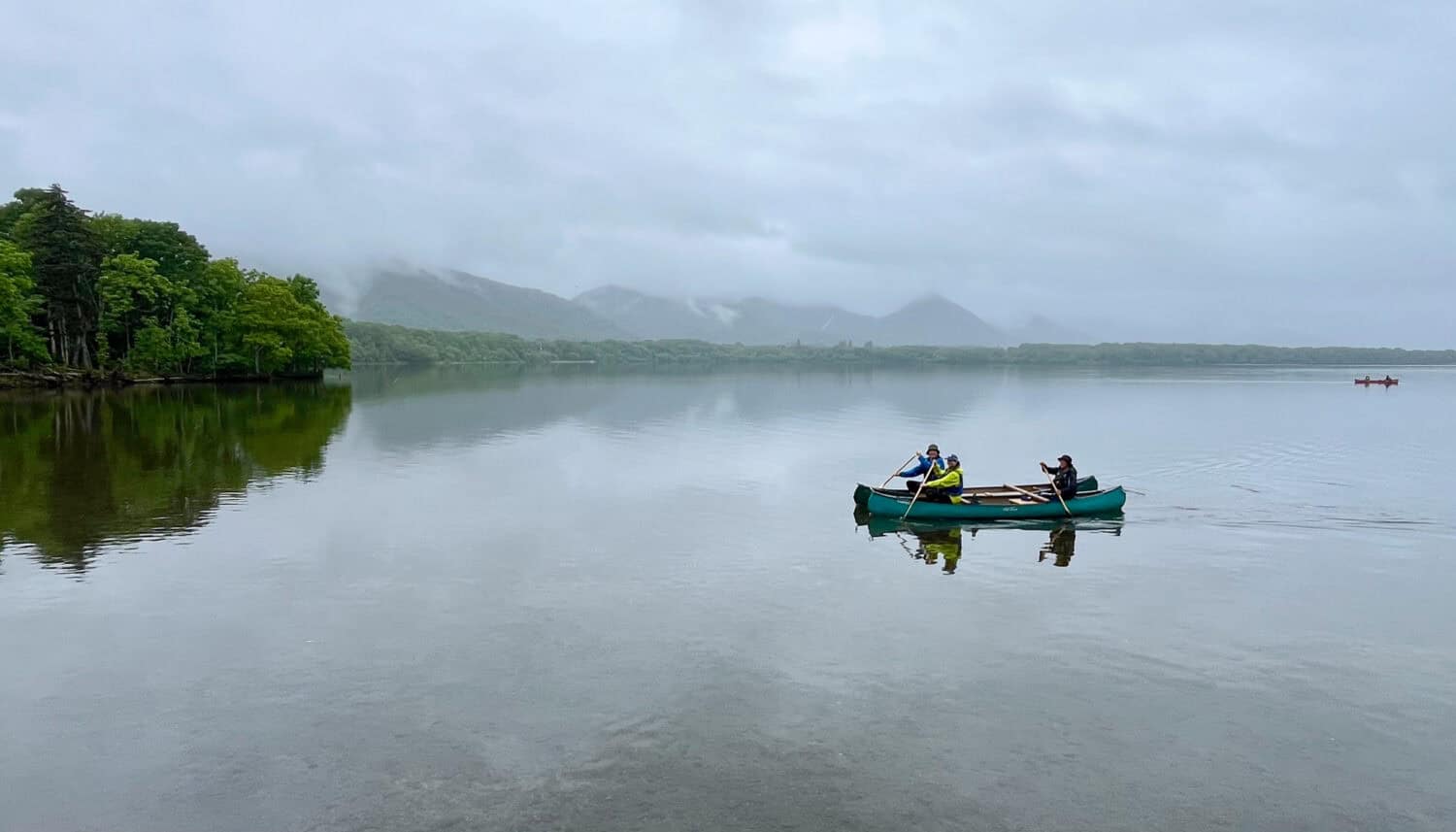
It made it a super relaxing, peaceful trip. The river is beautiful—very green and lush in summer, with low tree branches you have to duck under.
Towards the end, we stopped for a break at a shallow section. Sachi brought out chairs for us along with delicious herbal tea and a snack, so we could sit and enjoy the lovely environment.
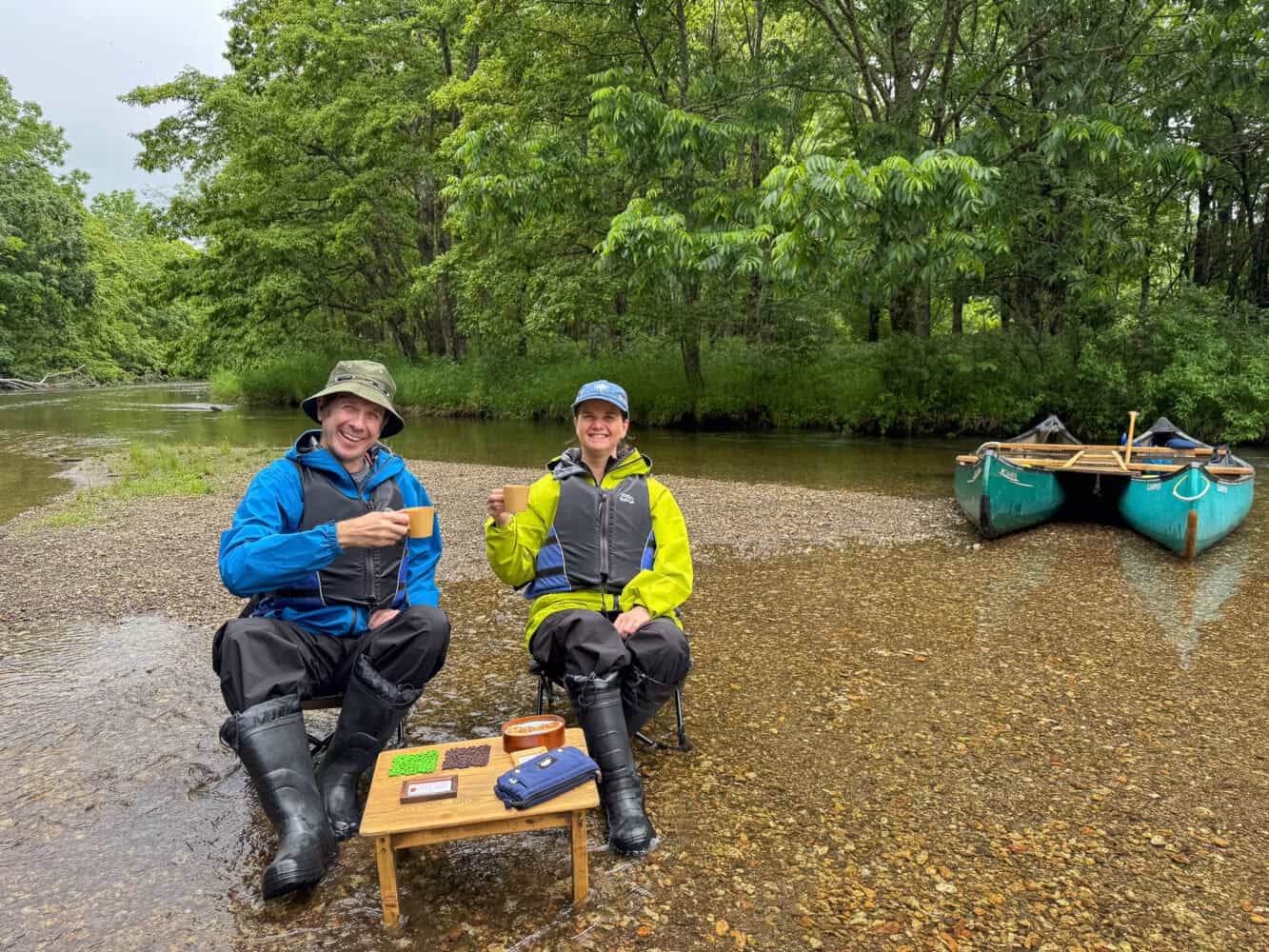
While I do wish we had booked further in advance so we could have done a longer trip, the short trip is still well worth doing. We absolutely loved it!
Don’t let rain put you off. We had a great experience in drizzle, and the company provides full rain gear and boots.
We are very tempted to come back and canoe in winter, too—the river doesn’t freeze even when the lake does, so you can paddle through a snowy wonderland.
5) Dig Your Own Foot Bath at Sunayu

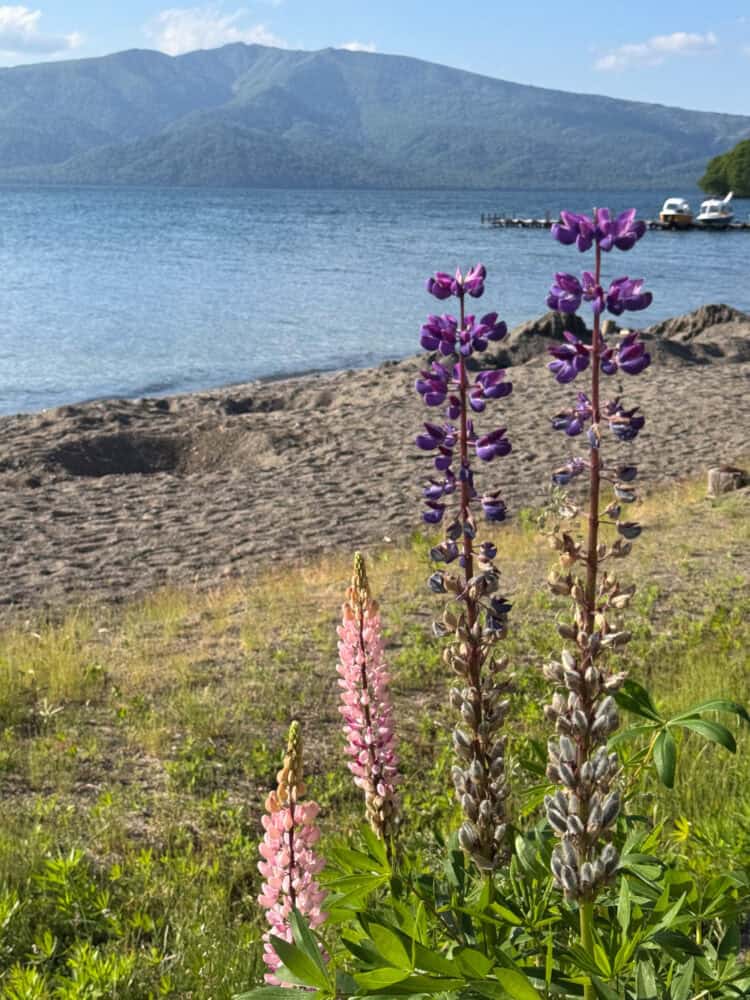
Sunayu is a unique beach on Lake Kussharo where you can dig into the sand to reach the hot water beneath and make your own foot bath.
The water is very hot, so we found being close to the lake was best in order to mix in some cooler water. It’s a fun experience!

There was a stand that rented out shovels and chairs, but it was closed on our visit.
Parking across the road is free. There are toilets, a shop, a restaurant, and swan boats to rent.
6) Soak in a Free Outdoor Hot Spring
Lake Kussharo is home to several free rotenburo, outdoor hot spring baths.
Unlike most onsens, swimsuits are allowed (but not required, so expect nudity) as they are mixed gender and not very private.
If you want to swim in the lake, you must wear a swimsuit.
Facilities are limited to just basic changing cubicles (sometimes without doors).
These are the three main rotenburo (it’s only a 15-minute drive between all three):
Kotan-no-yu
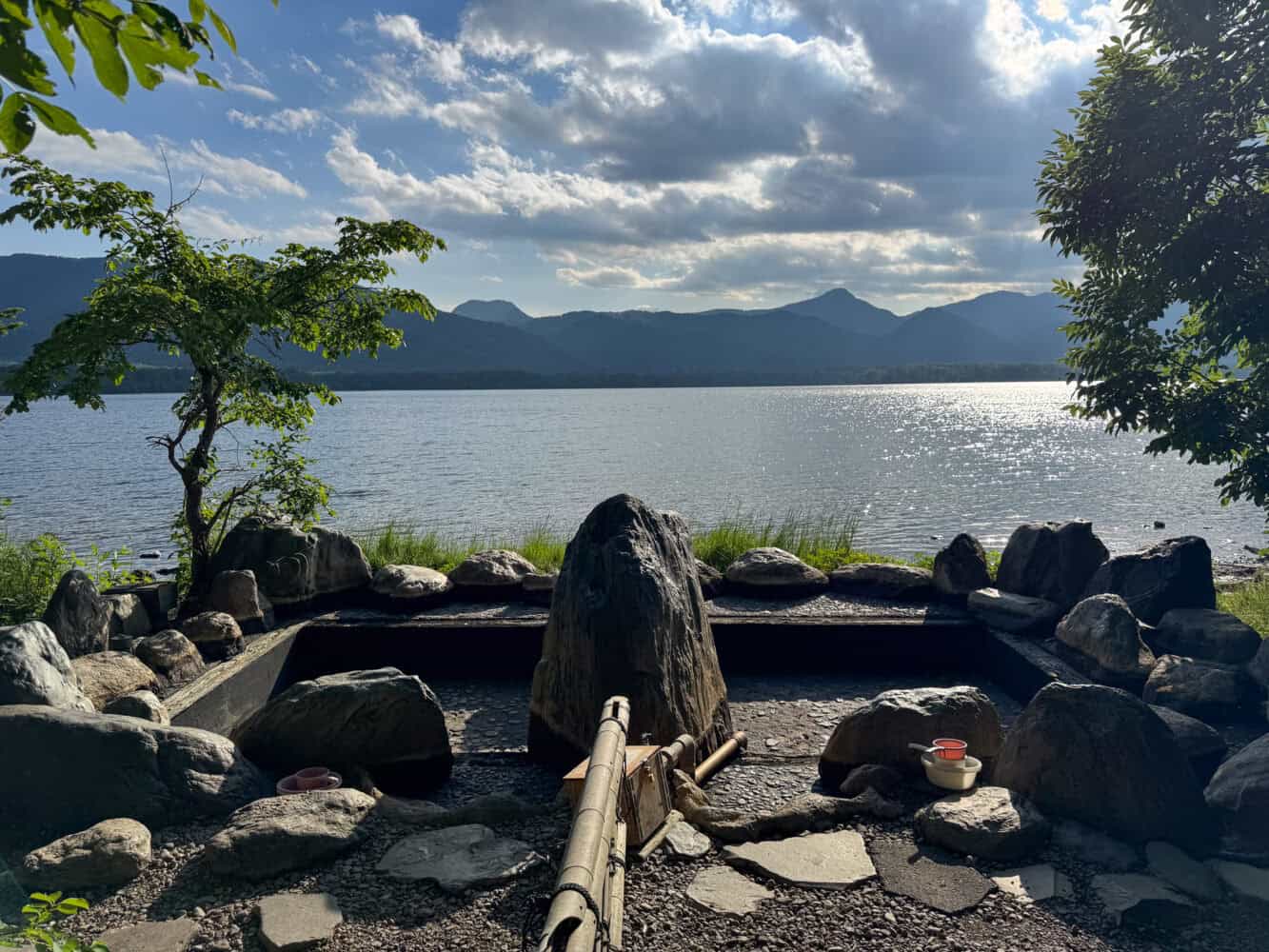
Kotan Onsen is the best-known hot spring at Lake Kussharo, offering wonderful views of the lake.
It’s the smallest one, though, with a low wall separating the male and female sides. There is a changing cubicle on each side with doors.
When we visited, it was closed and emptied of water, so we didn’t try it. Perhaps this means it is better maintained than the others, though.
There’s a toilet by the parking area, a few minutes’ walk away.
Ikeno-yu
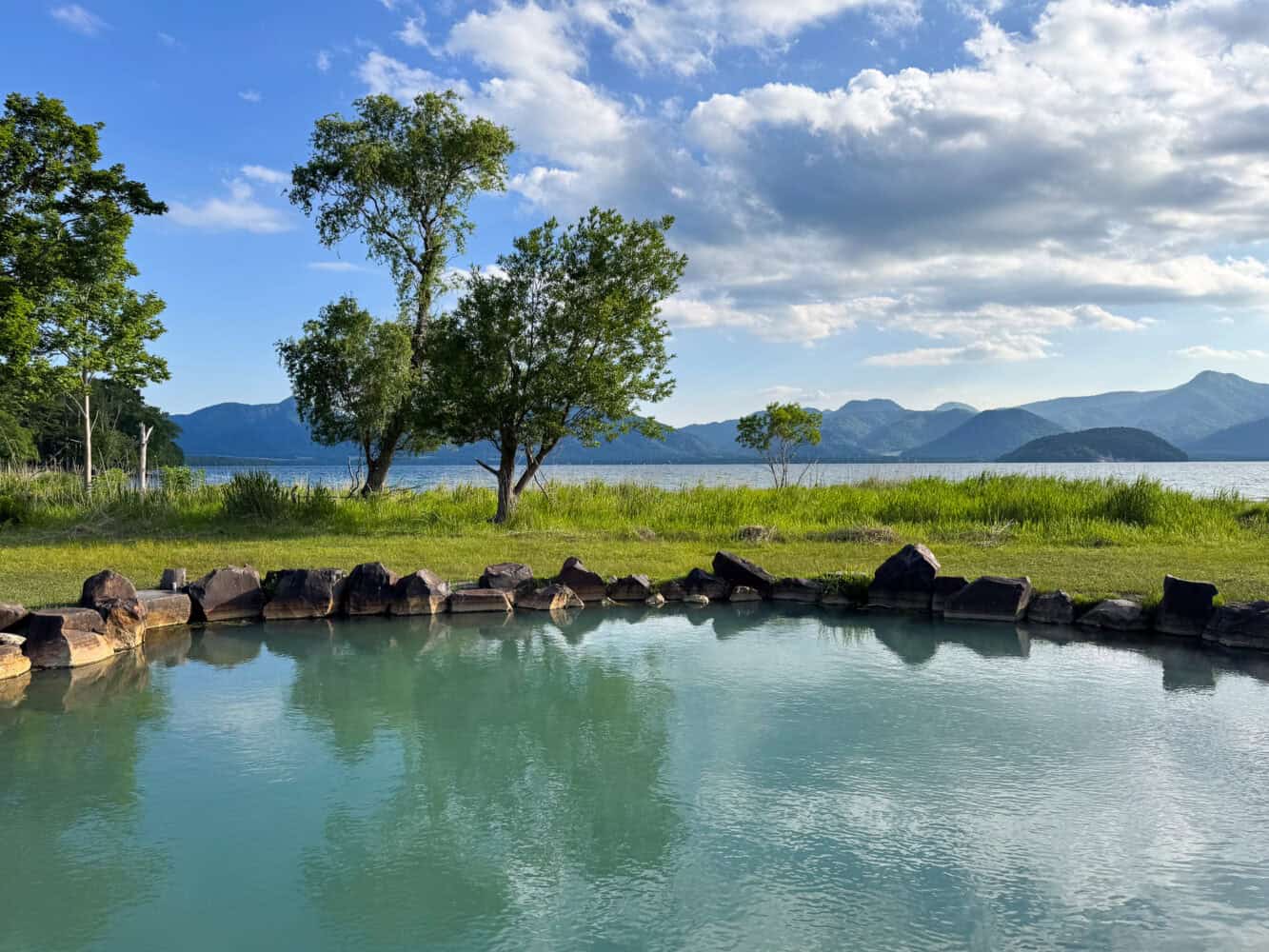
Ikeno-yu was my favourite onsen. It’s a fairly large mixed gender bath with a beautiful view of the lake.
We had it to ourselves most of the time on a weekday (it was busier when we returned on a weekend).
There is a lot of algae in the water, which didn’t bother me, but Simon was not a fan.
There are male and female changing cubicles (although the door on the women’s was broken), but no toilets (the ones at Kotan are only 5 minutes away).
I swam in the lake here, but it’s rocky and shallow and hard to get in. I was glad for my water sandals.
It’s a really beautiful and relaxing spot. We even saw a rare black fox nearby.
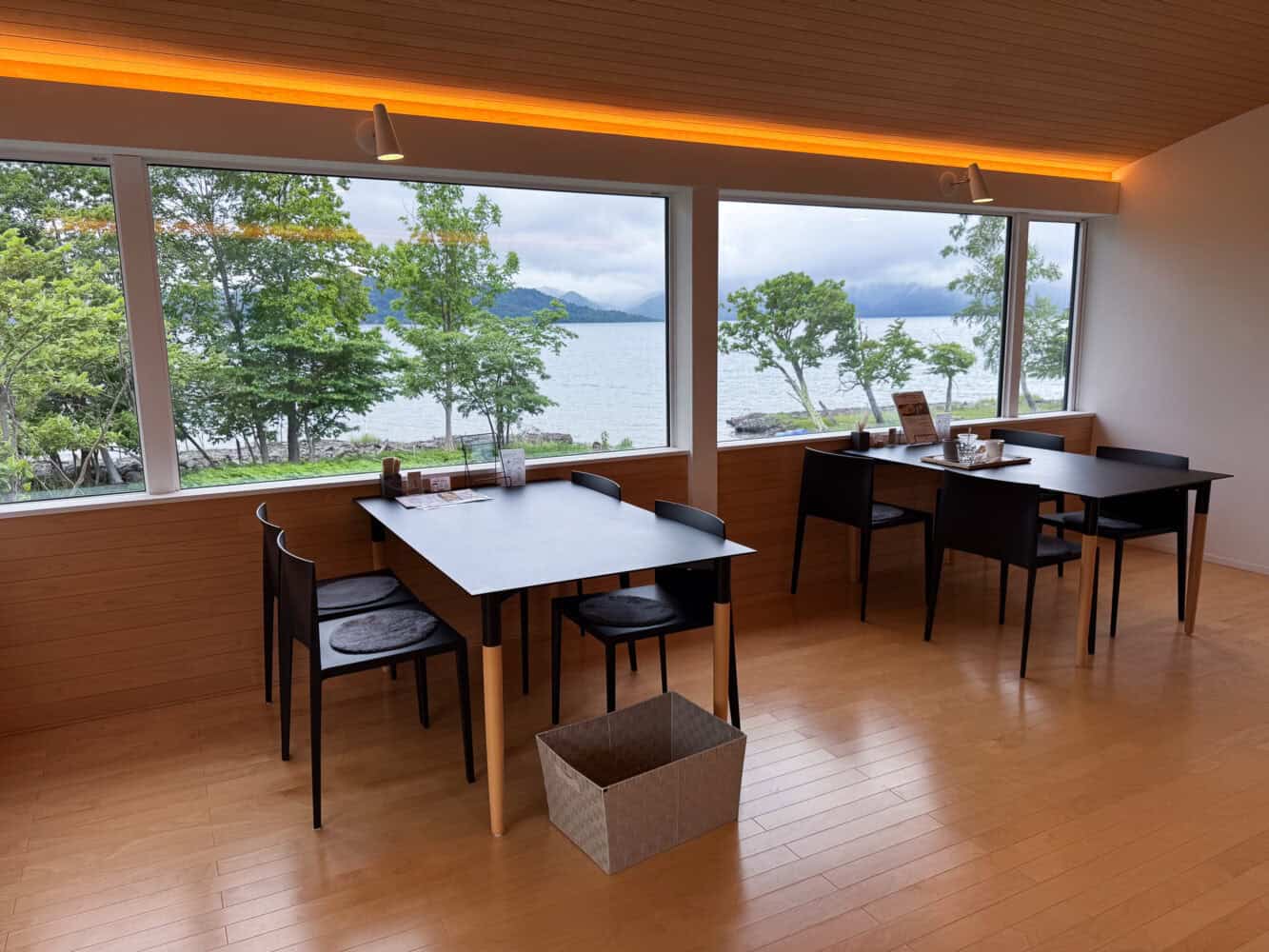
Next to the hot spring is the peaceful cafe Wakka Tomari. It has limited hours, but we returned on the weekend and enjoyed the cheesecake, ice cream, and lake views.
Wakoto Hot Spring
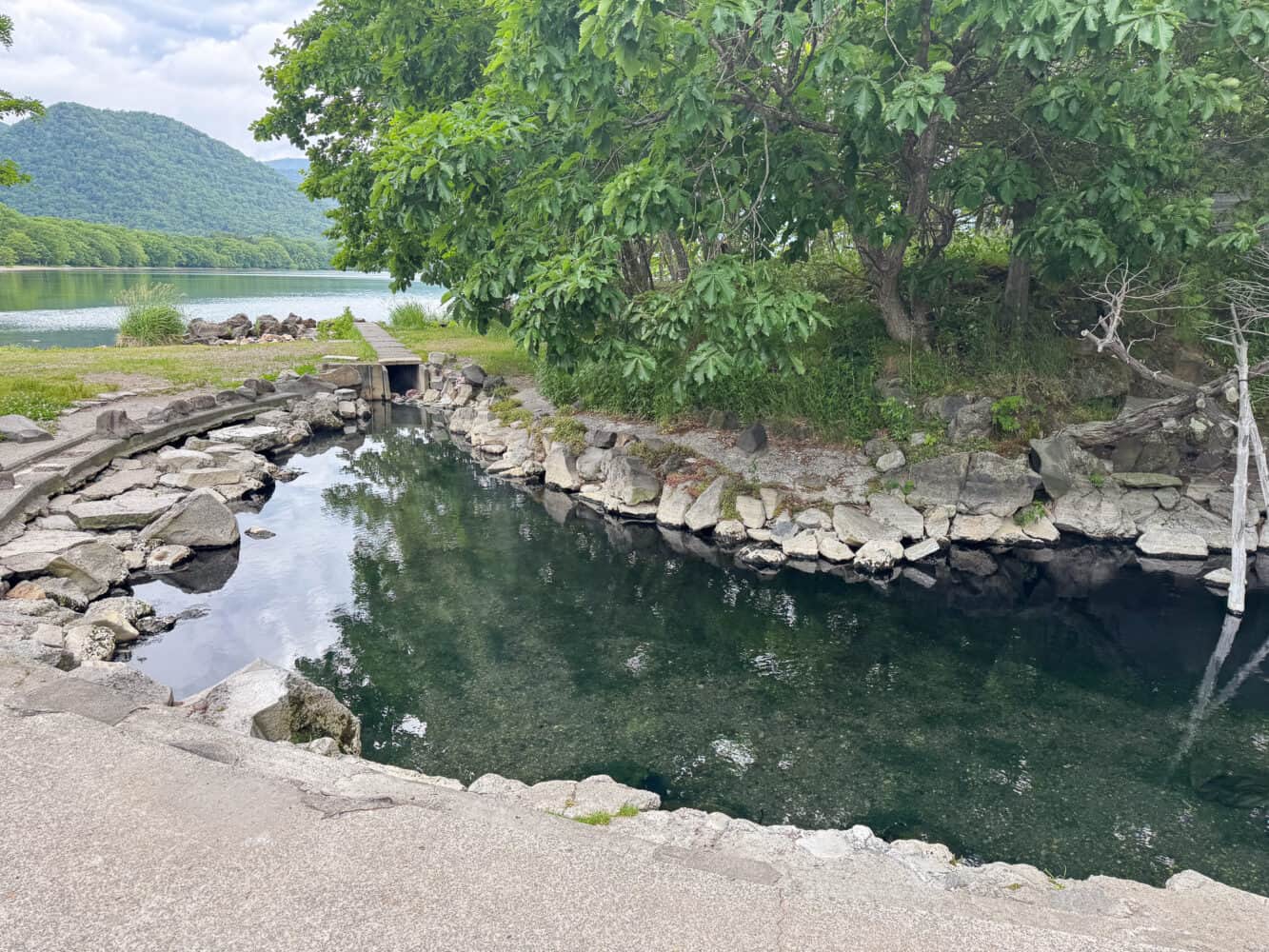
Wakoto Hot Spring is another free mixed-gender onsen with basic changing rooms (no doors) and nearby toilets.
If you are doing the Wakoto Peninsula walk (see below), you pass the hot spring near the beginning and end of the loop.
The hot spring was shallow and had algae, but I still enjoyed it. The highlight for me was swimming in the lake from the beach next to it, which was easier to access.
Note that there is parking right next to the hot spring, but it’s only for quick baths. Don’t park here if you are hiking or hanging out at the beach—the main car park (Wakotohanto Kokyo Parking Lot) is less than 5 minutes’ walk away, so park there instead.
7) Do an Easy Walk on the Wakoto Peninsula
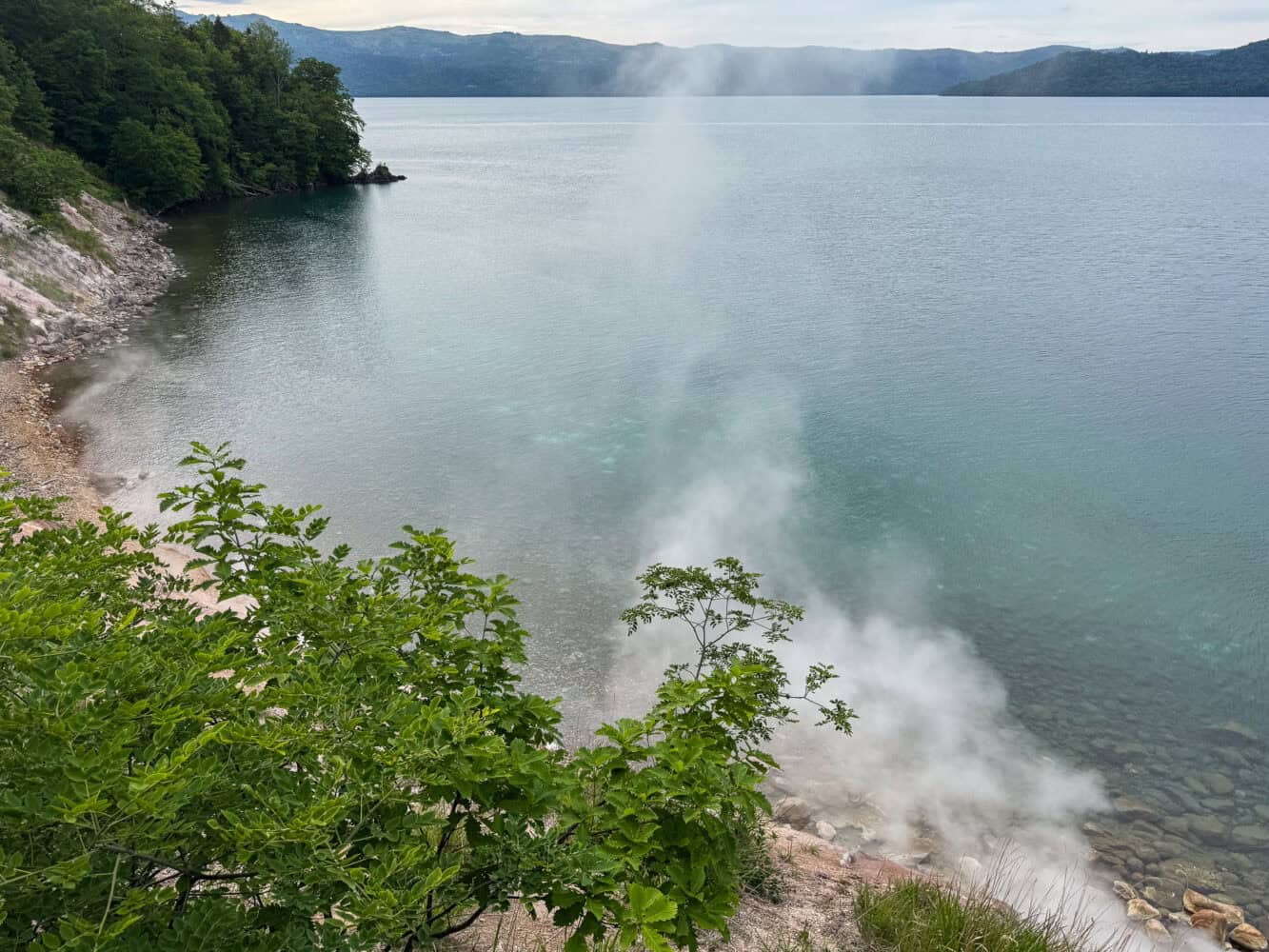
Our Hike Stats: 50 minutes, 3.3km (2 miles), 105 metres (344 feet) elevation gain.
AllTrails Page: Wakoto Peninsula Loop Course.
The Wakoto Peninsula was originally a volcanic island that eventually connected with the lakeshore.
The Wakoto Peninsula Loop Course is an easy walk through the forest around the peninsula. Halfway round is an observation deck overlooking the lake, where you can see steaming fumaroles.
The geothermal activity means that the peninsula is hotter than the surrounding area, and the autumn leaves change a few weeks later than elsewhere.
It’s not a must-do walk, but it was pleasant, easy, and quiet. It was perfect combined with a lake swim and soak at Wakoto Hot Spring.
There’s a large free car park next to Petetok (where you can arrange SUP tours—I wish we had done this) with toilets and a small shop. Wakoto Field House provides information on the area’s flora and fauna.
8) Swim in Lake Kussharo
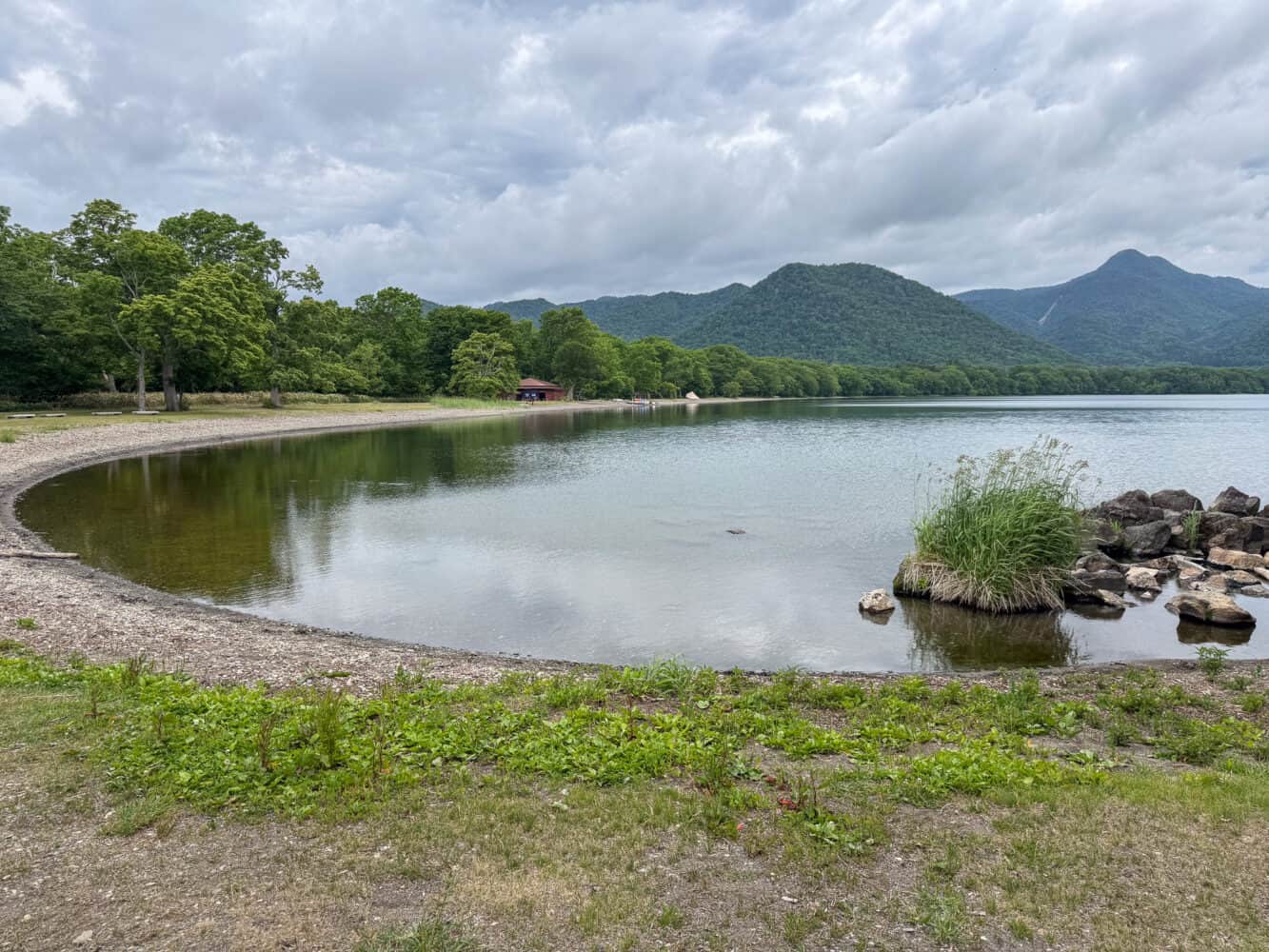
Our Airbnb host warned me that June was too cold for swimming in Lake Kussharo, and I didn’t see anyone else swim, but I’m a hardy Brit and found the water a pleasant 16ºC (61ºF).
It’s especially easy to take a dip in the lake when you can warm up afterwards in one of the hot springs.
The water is super clear, and the surrounding scenery is beautiful, so I definitely recommend a dip if you can handle cool water.
The lake is rocky, so water shoes make it easier to get in (I wore my Teva sandals).
You could swim at any of the hot springs or Sunayu beach, but I think the best spot is the beach on the Wakoto Peninsula, next to Wakoto Hot Spring.
The water was calmer, deeper, and easier to access there.
On a sunny day, the beach would be a great place to relax with picnic tables on the grass next to it.
9) Enjoy the View at Bihoro Pass
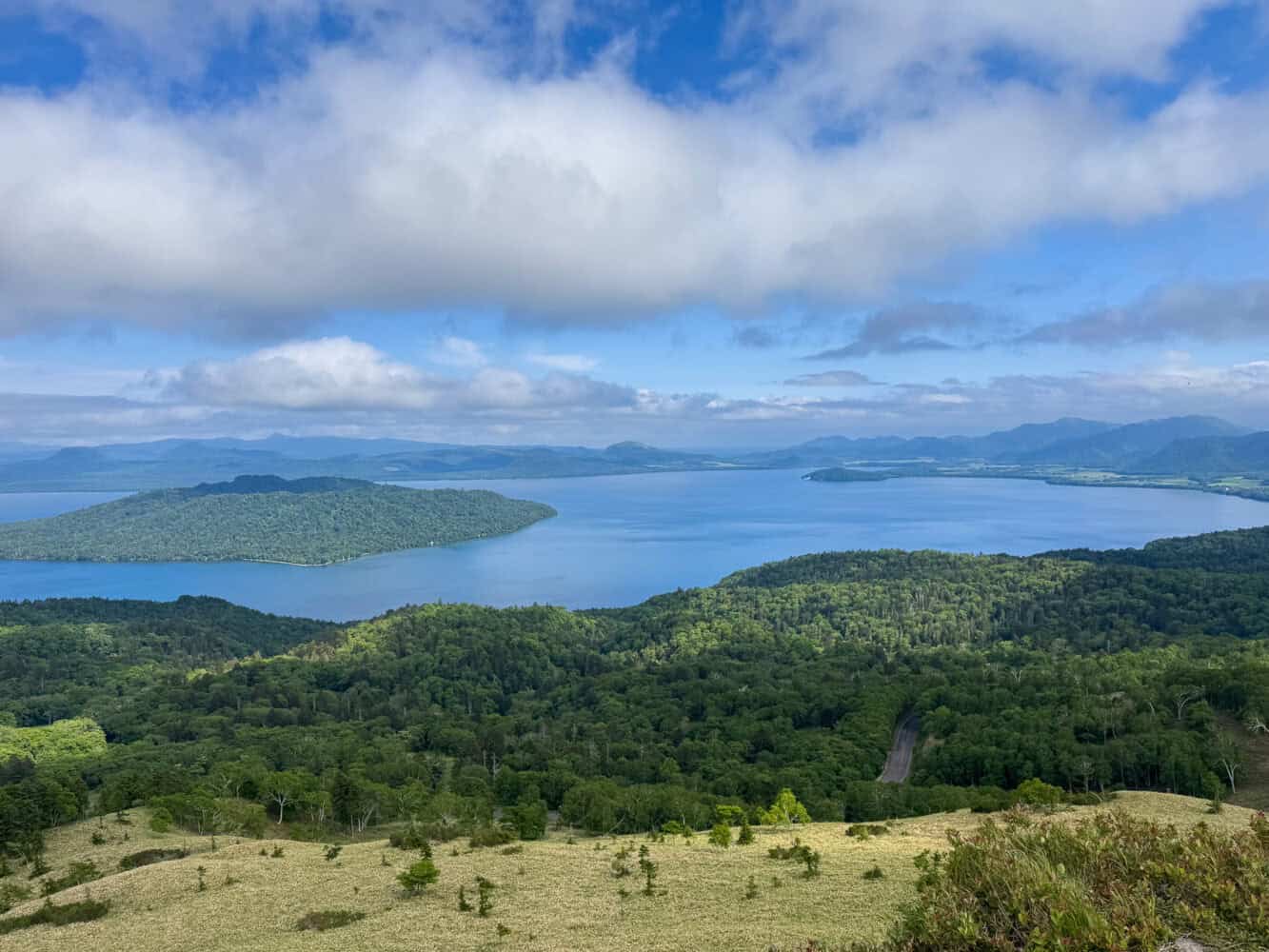
On our drive to Lake Kussharo, we stopped at the excellent Michi-no-Eki (Roadside Station), Bihoro-toge on the Bihoro Pass for spectacular views of the lake.
There are snacks, souvenirs, and toilets, and on the second floor, there is a rest area where you can eat, enjoy the view, and even play the piano.
I tried the unique kumazasa (bamboo leaf) flavour soft serve, which tasted similar to matcha.
You can walk up the hill (about 7 minutes) for even more expansive views of the lake.
Lake Akan
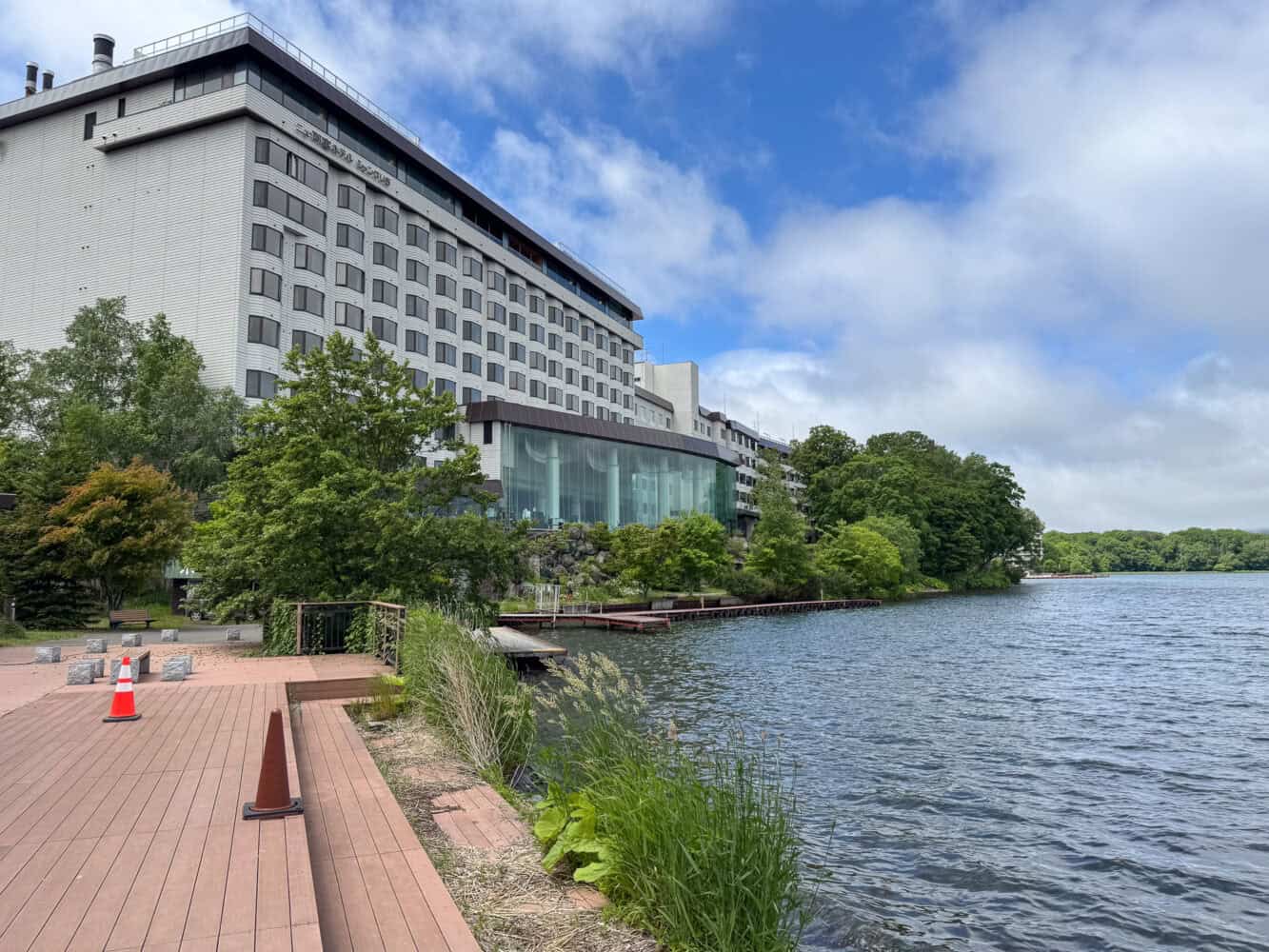
Lake Akan is another crater lake that’s known for its marimo, rare algae that form into balls.
This side of the park is where we spent the least amount of time, so I don’t have many suggested activities.
We’d originally hoped to hike nearby Mt Meakan, one of the best hikes in the park with incredible views and a lunar-like volcanic landscape.
Unfortunately, the summit was closed due to volcanic activity.
Instead, we made a quick stop at the lakeside village of Akanko Onsen. We parked at Akankohan Parking Lot, which is free and has toilets.
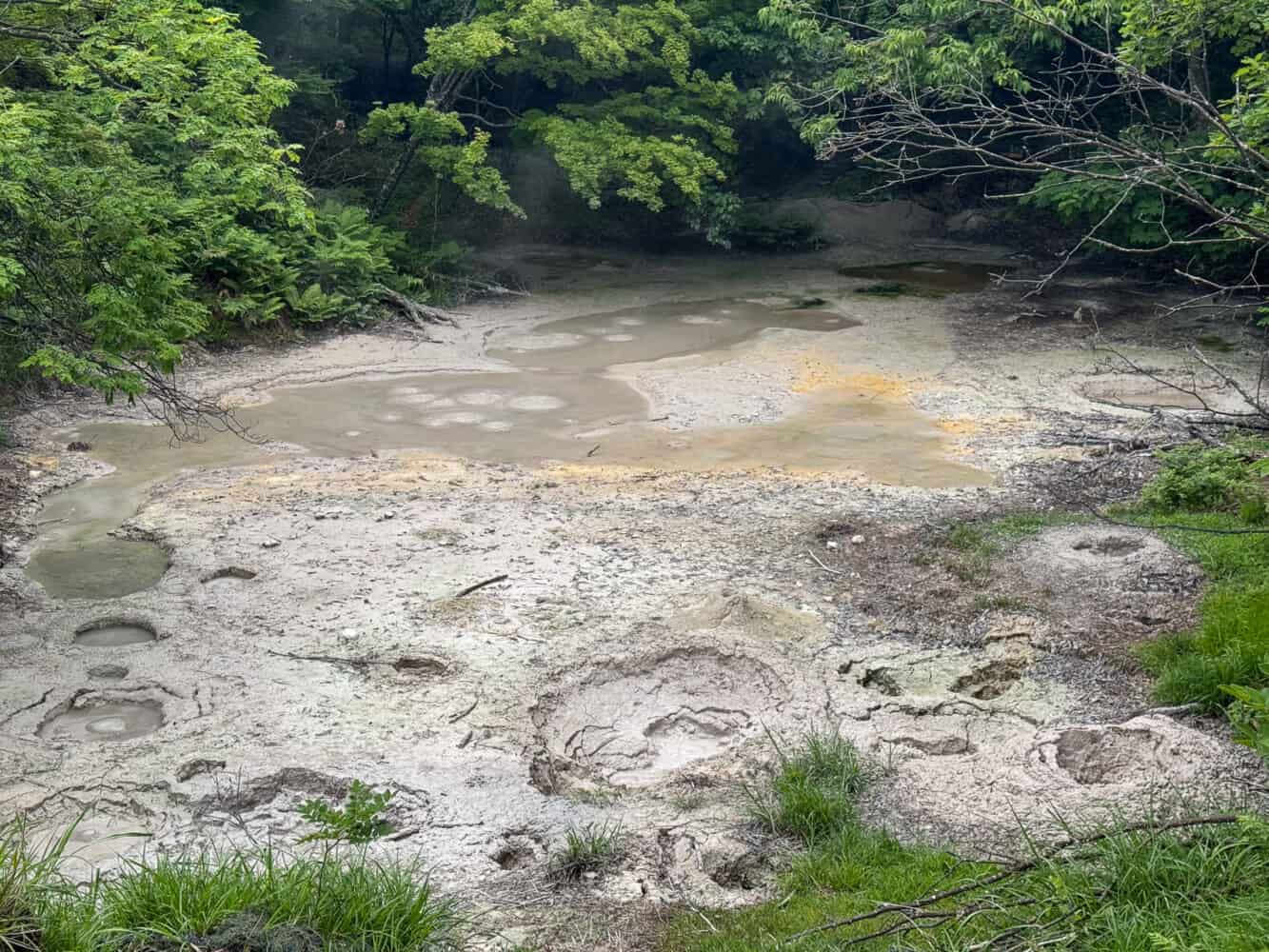
We did a 30-minute return walk on the easy lakeside forest path to the bokke, bubbling volcanic mud pools.
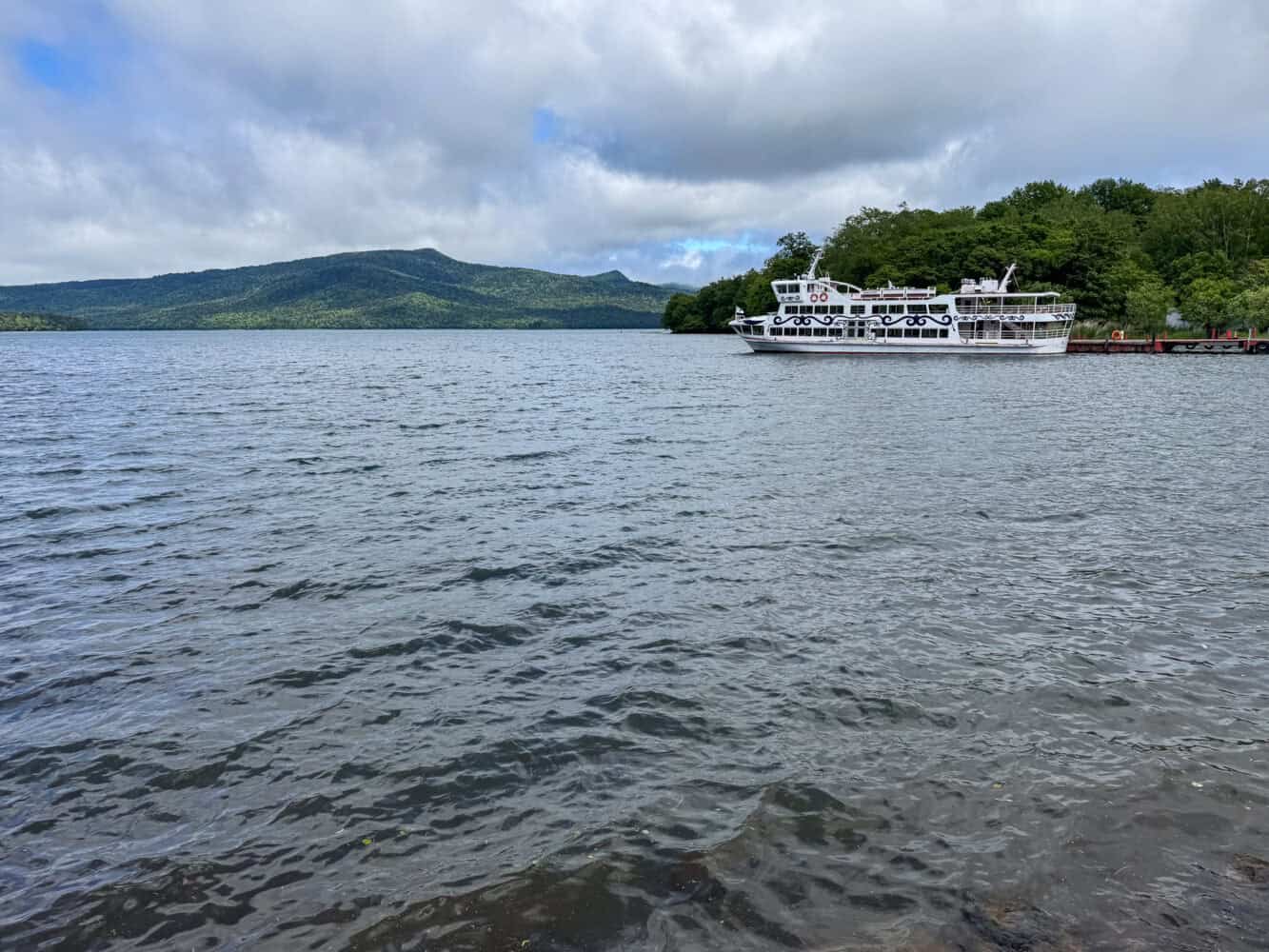
You could also take a cruise on Lake Akan with Akan Sightseeing Cruise Company. The 85-minute trip includes a stop at the Marimo Exhibition Center on an island. There’s no need to book in advance.
Also at the lake is Ainu Kotan, a small Ainu village with a museum and shops selling handicrafts.
Where to Stay in Akan Mashu National Park
Akanko Onsen
Akanko Onsen, a hot springs resort at Lake Akan, is the most popular place to stay in the national park.
There are several large hotels on the lake, such as Akan Yuku no Sato Tsuruga, which has beautiful hot springs with lake views.
Lake Akan would be a good base if you want the most choice of hotels and restaurants (although it’s still a small town), or your priority is hiking nearby Mt Meakan.
Lake Kussharo: Where We Stayed
We are vegetarians and eating out in rural Hokkaido is challenging, so we decided to stay in self-catering accommodation.
Airbnbs are limited in Akan Mashu National Park, but we found the most options at the southern tip of Lake Kussharo.
It ended up being an excellent location close to the lake for swimming, canoeing, and hot springs. It’s only a 25-minute drive from Lake Mashu (which has no accommodation).
Restaurants are limited at the lake, but the town of Teshikaga is only 15 minutes away (we stocked up on groceries at the Fukuhara supermarket there).
If you’d rather stay in a hotel, the only option on the lake is the Kussharo Prince Hotel. It looks rather dated but has an onsen and lake views.
Kawayu Onsen has more hotels and is between Lake Kussharo and Lake Mashu, but it had a very deserted town vibe when we drove through.
Our Airbnb House
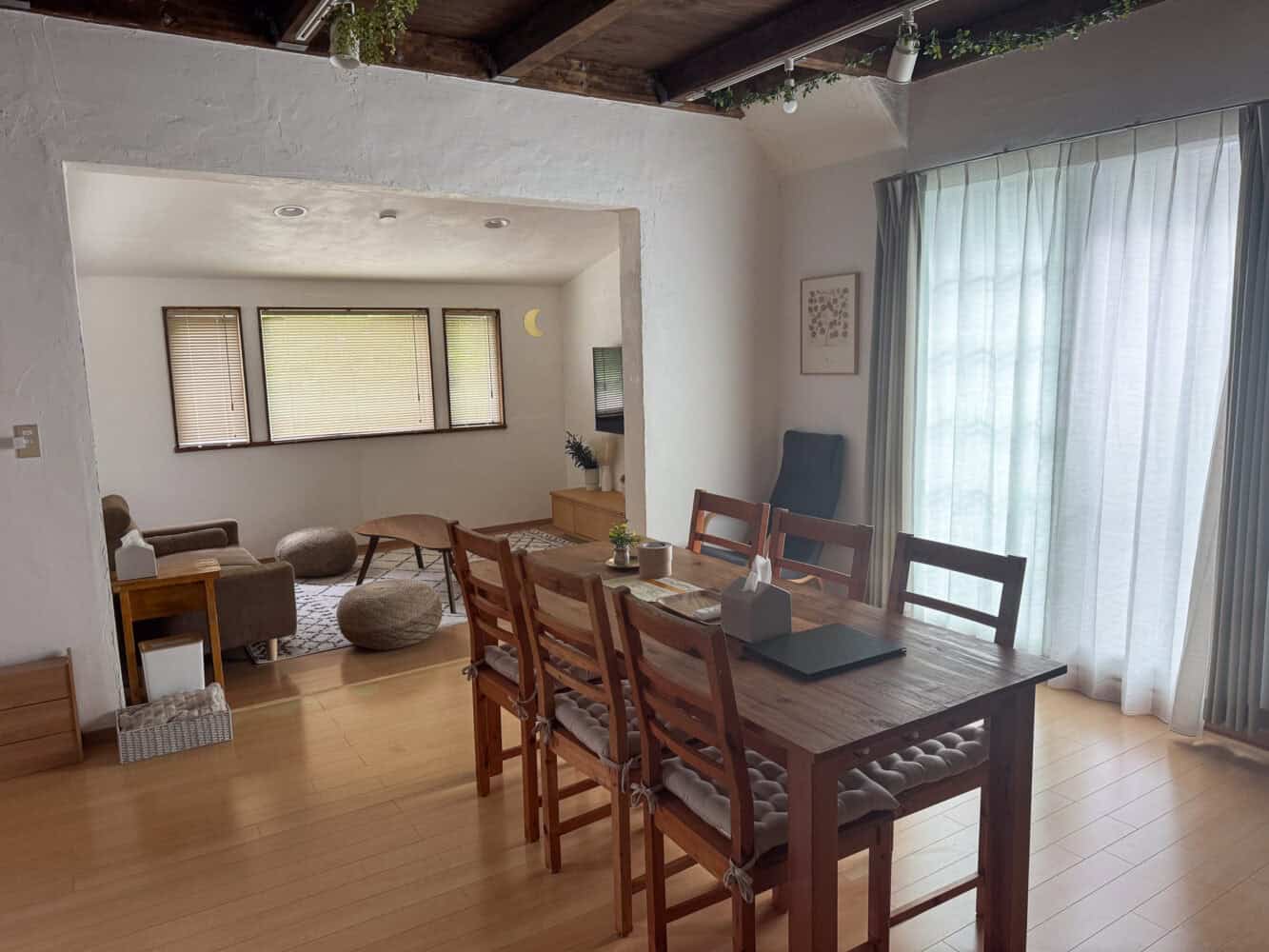
We stayed at Birch and Lake, a one-bedroom, two-storey house close to the lake.
It’s fairly simple and a little dark downstairs, but it’s comfortable enough and spacious for two, with a cosy living nook, a large dining table, and kitchen counter seating.
A highlight was the indoor onsen bath with hot water direct from a spring, which we really appreciated after hiking.
It also has a washing machine, air conditioning/heating (we needed both at different times!), and a pretty well-equipped kitchen.
The upstairs bedroom has five single beds, which is not ideal for us, but it’s typical in Japan. I loved the view of the trees from up there (it must be amazing in autumn).
Our biggest complaint was that they only provided two large towels (no small ones or kitchen towels).
Map of Akan Mashu National Park
This map includes everywhere mentioned in this Akan Mashu guide.
Is Akan Mashu National Park Worth Visiting?
Akan Mashu National Park is definitely worth visiting as part of a longer Hokkaido trip if you enjoy lakes, hiking, and hot springs.
We loved having five days in the area, so we had plenty of time to relax at the lake as well as hike and canoe. We could have spent even longer to do a paddleboarding tour and more hikes.
Eastern Hokkaido is one of the cooler parts of Japan, so it’s a great spot to escape the summer heat of Honshu (Japan’s main island).
Although you can’t guarantee beach weather at Akan Mashu—in late June, we had temperatures ranging from a rainy 16ºC to a sunny 22ºC (61-72ºF).
While we came across a few tour buses at Mt Io, we generally found Akan Mashu a tranquil place to visit and often had places to ourselves. It’s an excellent spot to escape the overtourism in more visited parts of Japan.
More Japan Tips
Read some of our other guides to travelling in Japan:
- Summer in Hokkaido Itinerary: Our Nature-Focused Road Trip
- Planning a Trip to Japan: Dos and Don’ts
- 17 Unmissable Places to Visit in Japan
- 26 Cool Things to Do in Tokyo
- Two Weeks in Japan: A Detailed Itinerary
- 56 Best Things to Do in Japan for an Unforgettable Trip
- Vegetarian Survival Guide to Japan
- Where to Stay in Japan: A Guide to Accommodation Options
Enjoyed this post? Pin for later!


Leave a Reply