This page contains affiliate links. Please read our disclosure for more info.
Burma (or Myanmar) is one of the least visited countries in Southeast Asia and has been ruled by a military dictatorship for fifty years. Many campaign groups urged a tourist boycott of the country until 2010 when democracy leader Aung San Suu Kyi was finally released from house arrest and changes slowly began to take place in the country.
There is still a long way to go to bring democracy to the country but Aung San Suu Kyi’s victory in the recent by-elections has brought hope for change to many people.
There have been relatively few tourists visiting the country but in the last year there has been a significant increase. Things are changing quickly, not just in the political situation, but on a practical level for travellers. It’s a country that needs some planning – you can’t just turn up as visas and money need to be arranged before you arrive.
Here is some up to date information from our trip to help you plan you own travels in Burma.
Burma or Myanmar?
Whether to call the country Burma or Myanmar is a complicated issue. The military junta changed the name from Burma to Myanmar in 1989, after a popular uprising when thousands were killed. Many governments (including the US and the UK), pro-democracy groups and media outlets such as the BBC continue to call the country Burma. A statement by the UK Foreign Office says: “Burma’s democracy movement prefers the form ‘Burma’ because they do not accept the legitimacy of the unelected military regime to change the official name of the country. Internationally, both names are recognised.”
In the country almost everyone refers to it as Myanmar and so did we when we were there. When writing about it on this website we have chosen to use Burma as it is more well known internationally and out of respect for the pro-democracy movement’s wishes.
You’ll need to make up your own mind. You can read more about the issue on the BBC and Washington Post.
Visas
You will need to arrange a 28 day visa before you arrive in Burma, but these aren’t difficult to obtain these days. The nearest place to get one is in Bangkok. It costs 810 baht and takes 48 hours (or you can pay 1250 baht for a same day visa). See Travelfish for details on how to apply. We haven’t heard of anyone being refused a visa but in the work history on the application form it’s best not to mention any journalism work.
We flew directly from Chiang Mai to Yangon so to save ourselves a trip to Bangkok we got an agent in Chiang Mai to get the visa for us. We used P & P Travel and it took about a week and cost 2,500 baht.
Getting There
If you want to explore Burma you have to fly into the country. While you can cross the border from Thailand into Burma at Mae Sai, this is only used as a visa run as you can only visit Tachilek, the town on the Burmese side of the border and not travel beyond there.
The usual route is from Bangkok to Yangon and the cheapest airline is Air Asia. As we were in Chiang Mai we flew direct from there to Yangon with Air Bagan (flights on Thursdays and Sundays at 5.20pm). They are more expensive than Air Asia though. Ours cost 5700 baht each booked through the Chiang Mai travel agent Travel Shoppe. You can email them for a quote at [email protected].
You don’t need to book an outward flight before you arrive but be prepared to be patient if you plan to book an Air Asia flight while in Burma – it is possible but the internet is very slow.
Money
Getting Your Dollars
Once you have your visa and flight to Burma your next big task is getting your spending money. There are no ATMs in the country and you must bring all of your cash as US dollars. To make matters more complicated the bills must be pristine – no creases, bends, spots or marks of any kind. They also need to be printed after 2006 and not contain the serial numbers beginning with CB, BC or AB.
Don’t leave the process of changing your cash to the last minute. You may need to go to multiple banks and money changers to find enough pristine new bills.
We changed our money in Chiang Mai in a number of places but had the most luck getting new bills at the Panda Exchange around the corner from Starbucks at Tha Phae Gate.
Make sure you keep your money pristine once you have it. Do not fold it and make sure the corners don’t bend. We found our bills stayed flat when kept inside a plastic ziploc bag and stored in our money belt. We kept some in a notebook as well, just in case.
Changing Money in Burma
The money changers in Burma really are strict. We had one bill rejected as it had a minute smudge on it. Luckily we found hotels and travel agents to be less fussy and were able to use our smudged bill there. We also had a few bills that had a small stamp from the money changer on it and had no problem using these – to be on the safe side I’d avoid stamps if possible though.
You will pay for hotels, ferries, flights, trains and some entrance fees in dollars, and everything else in the local currency kyat (pronounced chat). You’ll get the best rate of exchange in Yangon so you’ll probably want to change about half of your budget into kyat there. It is possible to change dollars to kyat in other parts of the country though.
It used to be that the official exchange rate was far below the black market rate so everyone used the black market to change their dollars to kyat. The situation has now changed and we changed our money at the AGD Bank on Sule Paya Rd between the Sule Paya and Anawrahta Rd. We got a rate of 805 kyat per dollar, which is less than the 850 we could have got on the black market but we heard so many stories of people getting ripped off by the street money changers that we went with the safe option.
Costs
Burma is more expensive that other countries in Southeast Asia, especially for accommodation. As tourism has increased rapidly in the last year there is a shortage of hotels and prices have increased significantly.
We usually paid $22 or $23 a night for a fairly basic but decent double room with ensuite and air-conditioning. You could save by going for a fan room with shared bathroom but I think doubles are still at least $15 in the main tourist destinations. Breakfast is always included.
Tourists pay double the local rate on buses and the overnight trip from Yangon to Bagan cost 15,000 kyat ($19).
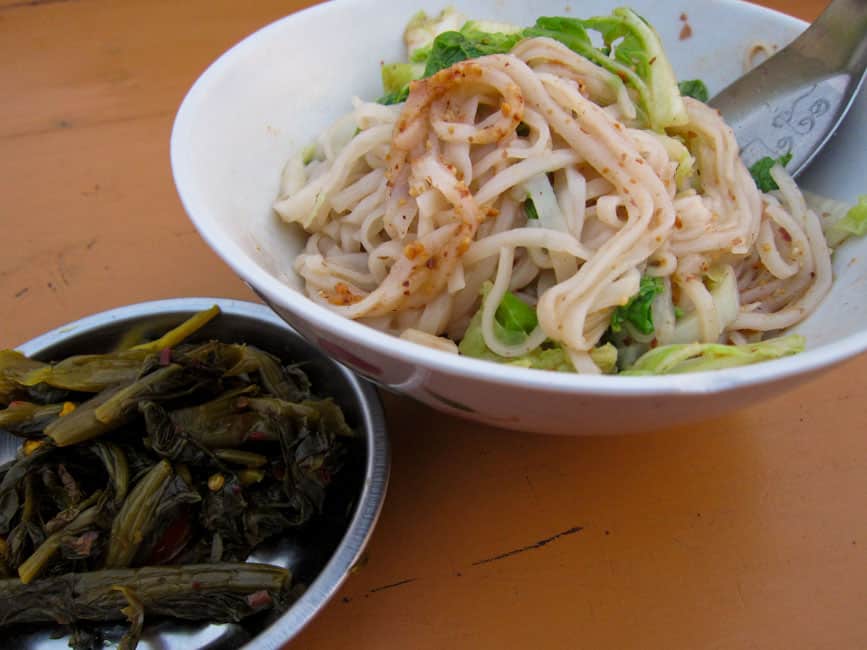
Local food is cheap though. A dish at a street stand cost from 500 kyat ($0.60) and even in restaurants we could eat for 1000 kyat each ($1.25). Tourist restaurants obviously cost more.
We spent $63 a day for two people ($31.50 a day each) plus $137 each for internal flights.
It’s a good idea to take more than you expect to spend as you don’t want to run out.
When to Go
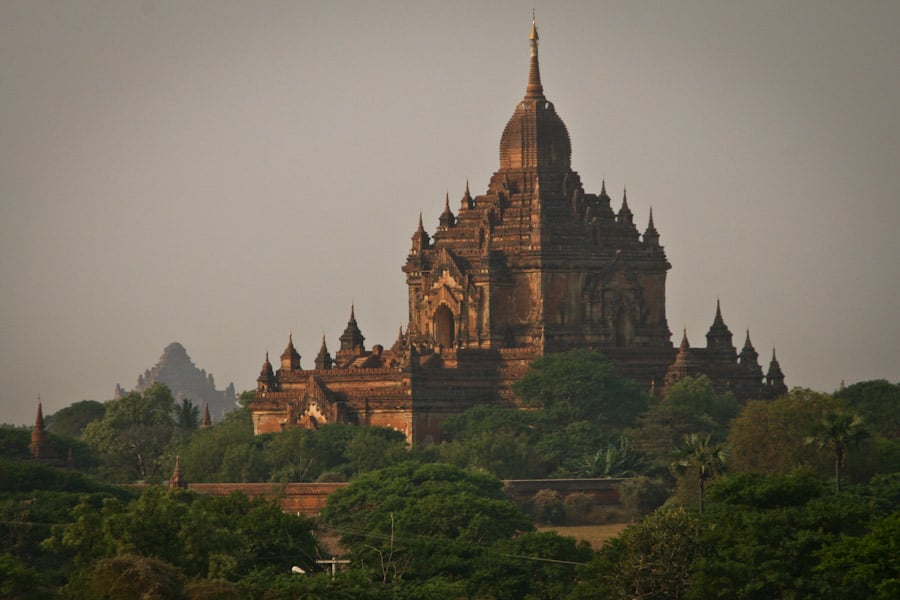
The best and most popular time to visit is December – February when the weather is cooler and dry. We visited during the March – May hot season and did indeed find it steaming hot with temperatures up to 40 degrees. We wouldn’t recommend this time of year as the skies were very hazy from the farmers burning their fields and the landscape was dry and brown. On the plus side there are less tourists than in the high season and we found it easier to get hotel reservations than people who visited earlier in the year.
Getting Around
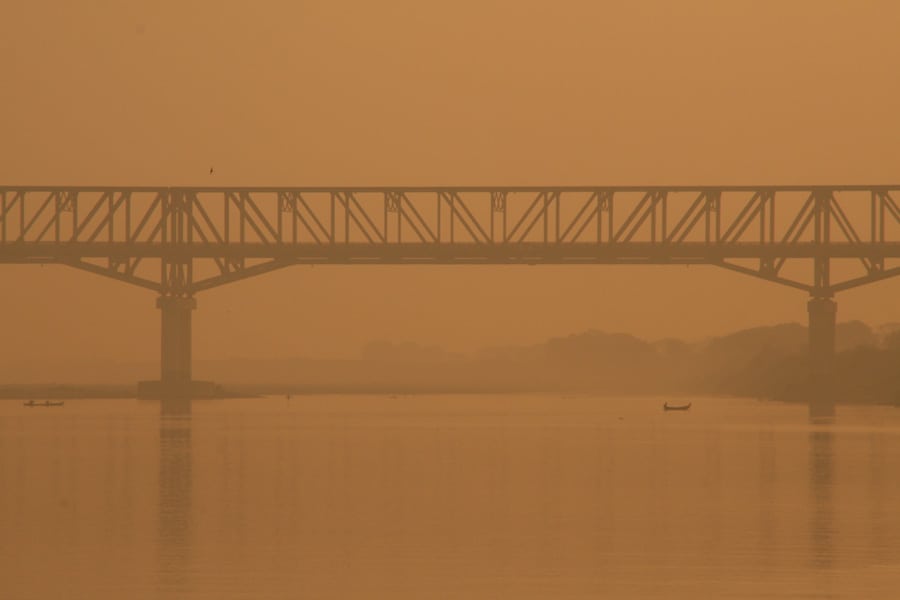
You might want to consider a few internal flights as the trains, buses and roads aren’t in great condition and journeys are time consuming. That said the overnight bus from Yangon to Bagan was much better than we expected as there is now a new road for most of the way. We were told to take warm clothes as the A/C is usually set to arctic but luckily we were able to turn our vent off so we didn’t have a problem.
We travelled by boat from Bagan to Mandalay and it was much more enjoyable than the bumpy bus journey with plenty of space to spread out. In March the local boat took two days so we went with the tourist boat ($30) which left at 5.30am and took about 12 hours. It was a comfortable and enjoyable journey and it was interesting to watch life along the river.
We flew from Mandalay to Heho for Inle Lake ($44 each) and from Heho to Yangon ($87 each). It saved us a lot of time and energy.
One thing to bear in mind is that bus stations and airports are usually located about an hour outside of the city (Yangon, Mandalay and Inle Lake) and taxi rides can cost about $10 to get into town (or $25 from Heho to Inle Lake) so share with other travellers if you can.
Hotels
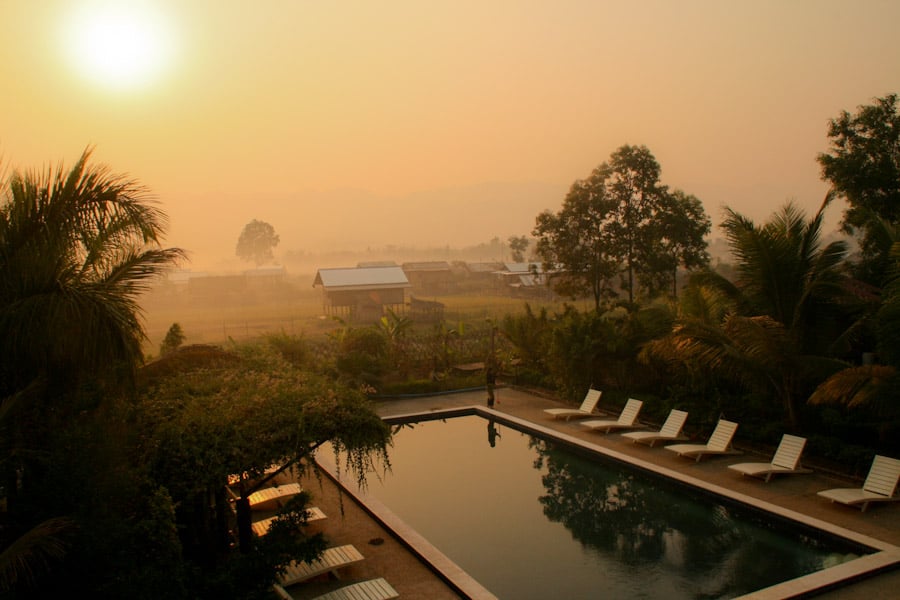
There is a shortage of hotels in Burma so it’s a good idea to book in advance. Most hotels aren’t online so calling is the best way to make a reservation. We usually booked a day or two ahead and had no problems but in the high season we heard that people often struggled to find a place.
Here are some hotels that we recommend:
Mother Land Inn 2 in Yangon – This was the best budget guesthouse we stayed in with clean rooms, friendly staff, free airport pickup, and computers with pretty fast internet. We liked the Burmese options for breakfast too. The only downside is the location about a 30 minute walk from the centre of Yangon. Our double ensuite room with A/C cost $23.
May Kha Lar in Nyaung U, Bagan – Although the rooms were shabbier and darker than at Motherland this was still a good option with a really friendly owner and a good breakfast including pancakes, fruit, eggs, toast and coffee/tea. Our double ensuite room with A/C cost $23 or a room with shared bathroom is $15. Telephone: 061 60304.
Princess Garden Hotel in Nyaungshwe, Inle Lake – This is our top pick and completely worth the $36 for a double. Everything was perfect here – the lovely individual bungalows with verandahs and views over the surrounding countryside; the lush gardens full of butterflies and flowers; the refreshing swimming pool; the free bike hire; the reasonably priced mini-bar; the big breakfasts including pancakes; and the little touches like a different fruit shake served free every afternoon.
We loved the quiet location on the edge of town but only a short walk away. It felt peaceful and rural next to a canal with views of the mountains and the neighbours were locals in thatched huts rather than other hotels. Telephone: 081 209214.
Note: Powercuts are frequent everywhere in Burma, especially Mandalay, so a head torch comes in useful.
Internet
Internet cafes are fairly common but the connection is very slow. The best connection we found was at Motherland 2 in Yangon and in Mandalay. I have also heard that Pyin U Lwin has high speed internet.
WiFi was more common than we expected. Our hotels in Bagan and Mandalay had WiFi and we saw it advertised in a number of restaurants in Bagan. We also used the WiFi at the Pancake Kingdom restaurant in Nyaungshwe (Inle Lake).
Generally though it was so slow that we only used it for the essentials. Don’t expect to be able to do anything complicated like Skype or upload photos.
Reading
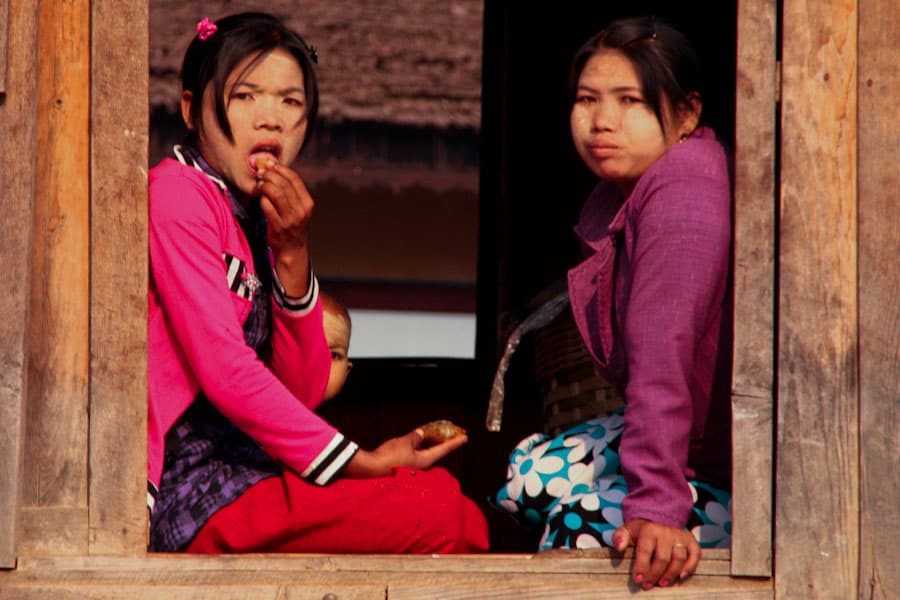
It’s important to educate yourself about Burma’s recent history before you visit. We were lucky to have access to the excellent Best Friend Burmese Library in Chiang Mai and we also bought some books for our Kindle on Amazon.
Here are some books we recommend:
Lonely Planet Myanmar – A good introduction to the politics and culture and the most up to date guide for hotel listings etc. We found hotel prices to have gone up by about $5.
From The Land of Green Ghosts by Pascal Khoo Thwe – A moving, beautifully written, and inspiring true story of a student from a Padaung tribe who gets caught up in the resistance movement and is forced to flee from the military and live in the jungle with guerilla fighters. A chance meeting with a Cambridge University don leads to him being rescued and sent to Cambridge to study. It’s a great insight into the life of ethnic tribes, recent Burmese history and the problems of the regime but from a personal viewpoint.
Little Daughter by Zoya Phan – The true story of a girl from a Karen village who was forced to flee after her village was attacked by the Burmese military when she was 14. It tells the story of growing up in a Karen village and how everything changed when they had to escape through the jungle and eventually live in a refugee camp in Thailand.
Finding George Orwell in Burma by Emma Larkin – As the author travels around Burma and learns about the political climate there she discovers disturbing similarities to Orwell’s 1984.
The River of Lost Footsteps by Thant Myint-U – A history of modern Burma that looks at events in the past to explain the situation in the country today.
Letters From Burma by Aung San Suu Kyi – Short essays on different aspects of Burmese culture, traditions and politics.
Perfect Hostage by Justin Wintle – A biography of Aung San Suu Kyi although it goes back further into Burmese history especially to the time of her father Aung San and the fight for independence from the British.
The Trouser People by Andrew Marshall – A British writer follows in the footsteps of a little-known Victorian colonist Sir George Scott to visit hill tribes in Shan State. As well as a travelogue you learn about the history of British rule and the current political situation.
The Lizard Cage by Karen Connelly – This is a novel but is based on the author’s extensive research and the real experiences of political prisoners in Burma. It’s an incredibly tragic but beautifully written story of a dissident singer imprisoned in solitary confinement for 20 years.
The Glass Palace by Amitav Ghosh – Another excellent novel and an epic multi-generation saga set in Burma, India and Malaysia from the British invasion of Burma to current times.
Twilight over Burma – My Life as a Shan Princess by Inge Sargent – An interesting true story of an Austrian woman who married a Burmese prince from the Shan states and became the princess of Hsipaw until the military coup in 1962 when he was taken prisoner and probably killed.
It’s worth planning your trip to Burma and reading up on the country more than you usually would. It’s a complicated country and you’ll be rewarded with a greater understanding of the people, culture and political situation.
For photos, quirky details and cultural insights see our post 35 Random Observations About Burma.

Awesome blog.
Thanks for sharing your stories!
Hi Erin,
I commented on this post years (wow) ago, saying I’d never really considered Myanmar. But I went this year and was floored by its beauty and the warmth of its people. Thanks again for planting the seed :)
Kay
I’m so glad you enjoyed it!
Hi! I´m planning a trip this December (2015) and I´m glad I came across your site! It sounds a lot more complicated than I thought to visit Myanmar, but I´m glad for the thoughts and so well detailed!! Thank you!!
Hi there, thank you for the wonderful article (although I came across it a few years later!) . I like the sound of your itinerary and was wondering how long it took to travel ? Thanks in advance!
We were there for two weeks.
Hi guys, thanks a lot for sharing your blog with other fellow travelers. I am in ChiangMai and still trying to work our whether to adventure myself in Burma so it is really helpful what you have published online. Cheers! :)
Hi guys I,m in Chang Mai at the moment. I already have my visa for burma.after reading your article I think I will give it a miss .sounds like a total pain in the ares if you think that makes me a whimp,I have been back packing on and off for 15years over 46 countries,last 4 months in Asia Happy travels. Steveo
hi, thanks for the comprehensive writeup! just a quick question, did your $63 a day for 2 include accommodation and transportation? And your trip was in 2011 or 12..? Thanx! :)
Yes it did except for internal flights ($137 each extra) and it was in 2012.
Your pics are so beautiful thank you! Also, with things the way they are in Thailand right now – http://www.bbc.com/news/world-asia-27585297 – maybe more people will head to Burma / Myanmar. There is a gem of an article with more on the rich culture and heritage for fellow travellers – – may be of interest.
Great article – planning to visit December time – so will make enquiries and arrangements as suggested. Thanks for all the info.
Hello Erin, no observations but big thanks! Your blog was an eye opener and I am following your advices 4 days prior to my trip. The way you wrote was professional and right to the point. Congratulations and thanks again. I look so forward to Burma!!! :))
Hi! Wonderful post on Burma – thanks, guys! You may already have addressed this, but my question was on getting Visa using P & P Travel. Do they mail you the Visa if you apply for it in advance? I’ll be flying into Chiang Mai in late February & would like to visit Burma. Thank you so much!
We dropped off our passport at their office and picked it up from them when it was ready a week later.
Hi!
I’m happy I found your website! I’m going alone to Burma this December-January and will be staying there for two weeks. Going alone, I guess it’s going to be more expensive for me especially with the hotels. Was it easy to buy a bus ticket for the overnight trip to Bagan? My plan is on the day I arrive at Yangon, I’ll take an evening bus to Bagan.
How about the hotels, how were you able to book in advance? It seems that some of the guesthouses don’t have online booking.
Thanks in advance! ;)
It was easy to get the bus ticket but we booked it through our guesthouse the day before. There is a chance they will sell out as it’s high season but hopefully you’ll be OK.
I really enjoyed reading about your trip and reading about your decision to travel the world. I wanted to know how much you would discourage or feel comfortable with traveling during the rainy season. I am a teacher and will not have the flexibility of traveling in March. I also want to know if you found it necessary to use tours or tour guides during your trip?
I appreciate what you do.
Karon
If that’s the only time you can go then just go. It’ll have advantages over March like being less hazy and greener, and cheaper too. We didn’t use tours or guides at all except at Inle Lake where you rent a boat.
Wow! Loving the write up you guys did! I am also planning for a Cambodia – Laos – Burma trip! Great information =) Thanks!
Could you say how much the trip in total cost? I read you spent 63 dollars per day, did that include costs like transport as well? Thanks for the nice piece on Myanmar.
That included all our costs except for the flights there and as we said in the post an extra $137 each for internal flights.
This has been very useful indeed! I was planning to go to Myanmar next week with my friend, but he sadly cannot get a visa. Instead, we are going to Borneo and then, instead of not going at all, I am going to brave going to Myanmar by myself as I was granted a visa here in Chiang Mai where I live.
I am having a bit of a pain working out how much I should realistically take. I have decided to pre-book my flights to save hassle when I get there here, and have found an exchange lady who has the dollars I need. Coming from Kuala Lumpa, I will book a flight to Yangon. I want to save money so will fly directly up to Mandalay, Mandalay – Inlay Lake – Mandalay – Bagan – Mandalay – Bangkok.
Could anyone give me a realistic idea of how much I should take in total for 7 days as a lone traveler? Seeing as I can’t get money out there, I need to be prepared :).
Thank you for the information – I can’t wait, if a bit terrified is my first experience traveling alone (I survived most of Asia and India in pairs before, so I am sure I’ll be fine…)
Glad you found it useful Heather and I’m sure you’ll have a wonderful time on your own. The Burmese are really friendly and you’ll probably make friends along the way.
As we said in our post we spent $63 a day for both of us but I’d say maybe allow $50 a day just for you to be on the safe side. I think prices have gone up since we were there a year ago, but it is low season now so maybe you’ll get some good deals. As you can’t get money out there and you’re only going for 7 days I’d take more than you think you need as it’s always better that way—maybe take $500 just in case.
did you travel by train at all?
No we didn’t.
hello erin, while planning a trip to myanmar with our family (3 children) i have read your nicely designed blog with interest.
When we get visas i will let you know our experiences.
Your blog inspires our visit!
Thank you for such an informative article. You ‘ve made my plan to visit Myanmar so much easier and definite. We are going in July!
Thanks—have a fantastic trip!
Thank you so so much for such detailed information. I am planning to go to Myanmar in late April – May and your information are incredibly helpful indeed.
One thing I found out is that flight is much cheaper from KL to Yangon (ard 100) than Bangkok – Yangon (USD150) now.
Too bad I couldnt make the trip during Nov- Feb as you suggested but I hope I could survive through the weather as you did.
Thank you again.
That’s a good tip – I would have thought Bangkok was cheaper than KL. I’m sure you’ll have a great time despite the weather.
I never really consider going to Myanmar, but now you have inspired me to rethink it! It looks beautiful. I will definitely look back at your article when I go there one day :)
I hope you make it there Kay.
Just an FYI that there are 10 ATMs that now work with foreign cards in random locations around Yangon. One was on the East Side of the Sule Pagoda. I wouldnt rely on them, but maybe things are changing for the better in this regard.
That’s good to know thanks!
I have re-read this post several times as we’re in the final planning stage for our trip to Myanmar. Each time I find something new and insightgful. I have a question about the cost of visas in Chiang Mai. Was the 2,500 baht for each visa or the total cost for both visas? Thank you so much for your wonderful blog. Brenda
That was the cost each. It’s definitely cheaper to do it in Bangkok but it wasn’t worth going all the way down there for us.
Thank you so much for this article! We’re planning on travelling to Myanmar next Tuesday from Bangkok, and your post has been one of the most helpful resources we found on the web! :-)
That’s nice to hear -thank you. Have a fantastic trip!
Greeting from Myanmar. Glad you had a great time there :)
This is super useful! I’m off to Burma early next year so this has been really handy. I’m surprised at the high cost of transport – again, good to know.
So much great advice – thanks guys. Burma is high up my list for when I head back to Asia, so this one is getting bookmarked! I hadn’t heard about the need for ‘pristine’ US dollars before, so that’s really handy to know.
Thank you! Thank you! Thank you!
We are leaving tomorrow or Yangon and this post is an invaluable guide. A little scared about our collection of US dollar bills, though, as every single one of our $100s were printed in 2006. Do you know if they accept bills printed in 2006 or does it need to be 2007 or later?
Thanks again for this fantastic guide!
Erik & Heather
I’m pretty sure our 100s were from 2006 so you should be fine. Have a great trip!
Wow, this is a really great and informative post. I had no idea about the money changing situation! That must have been a real hassle! I wonder why they are so picky? And especially with the serial numbers? That seems like a really banal thing to care about especially when people are eager to spend their money in your country!
It’s really strange and we couldn’t find out a good answer. I guess things will change soon though as the country is opening up more.
Re the serial numbers: there was a problem in the early 2000s with russian mafia counterfeit notes, hence no AB,CB serial numbers etc, and insistence on fresh notes printed after 2006.
Yay! You stayed at Motherland Inn 2 :) glad you liked it, though it is a bit of a walk but we like that kind of thing cos you get to see more of the people and place on the way :)
We enjoyed the walk too – its an interesting neighbourhood.
Brilliant guide, you two! Burma is on the cards for us this year too, so I’ll definitely be bookmarking this. Thanks!
I know you guys will love it!
An excellent guide and well timed to coincide with the massive interest in the country at the moment.
Another great guide! I’m constantly impressed by the attention to detail you have in these types of posts.
Thanks for wonderful and detail article .
it helped me to plan my trip to Burma.I can`t wait to be in Burma now.
Great post! Very informative and a great overview of a country not well known/understood. We’ll definitely keep this post as a resource. I especially appreciated the book suggestions. Thanks again for your generous post.
There are so many great books about Burma I was glad to share the recommendations. I hope you can get hold of some of them.
Great advice! This is a really thorough overview. I’m really interested in Burma but who knows when I’ll get around to going.
You guys are very lucky to see and explore Burma. The country has always been mysterious and not so much of a tourist spot but it was definitely a beautiful and wealthy country.
Great post! Thanks a lot for this. Thinking about visiting Burma later this year and maybe will pick your brain some more during the next weeks… :D
Of course – just ask away.
Thanks so much for this guide, guys. We really hope to visit Myanmar when we move to Asia later this year. Glad to see the country getting more publicity lately.
Wow this is great information. I am going to Burma in December so I will be using this as reference!
We went when you could only get a 7 day visa and as you say the black market was the way to exchange money, along with a bottle of whiskey!
We arrived at the start of the waterfestival so the train ride from Rangoon to Mandalay was interspersed with water bombs flying in through the window –
Don’t know how our cameras survived the daily soakings –
But loved it :)
It must have been very different then. Songkran must have been a fun, if wet experience!
I’m thinking about including Burma to my trip to SE Asia later this year, I’ve always been fascinated by this country. Thanks for the tips!
I’m considering taking my youngest daughter to Burma this year, so thanks for this comprehensive and very useful article!
I’m hoping to finally get to Burma at the end of this year. I nearly got there in 1990 (when the visa was for 7 days only and the best rate of exchange was for Johnny Walker Red) – but I’ve always wanted to go to Mandalay – its something about the name …
A lot of people find that Mandalay doesn’t live up to the name, but it’s a transport hub so you’ll likely visit anyway, and some people do like it.
Wow, what an incredibly useful post. Love the photos too, you’ve really taken advantage of the haze to create some lovely shots :D
Haha! Nice of you to put it like that. It was tough to get good photos with the haze.
Very useful article! One thing to add maybe: Conscious travelers can still do something after they returned home and let us know at my.ecoburma.com if they have observed anything where tourism harms the Burmese people.
Thanks for letting us know about that Chris.
Fantastic guide for Burma. Very detailed and helpful. I know it’s not a popular destination for visit but very well researched with some great details for dealing with the basics of travel there.
However, why in the world do all the bills need to be crisp with no marks? I don’t really understand that.
I know – it’s so bizarre! No one could figure out why. One guess was that the country isn’t trusted very much so they need perfect bills for trading. Who knows.
Thanks for this awesome summary. This will safe me lots of time researching for when we are going to Burma later on this year. It sounds like a fascinating country and think it is exciting times to be visiting it at the moment.
It’s a great time to be visiting – I hope the info here hasn’t changed too much by the time you get there.
We were in Myanmar in April and it seems like prices have been rising exponentially even since when you were there. Even the street stands would charge us 1000-1500 each for something like vegetable soup. We stayed at Motherland Inn 2 also and had to pay $23 just for a room with outside shared bathroom, fan, and no windows so it was very hot and noisy. I’m guessing the ac rooms were a lot better but they had no availability for those. We had a great time there but it was definitely a lot more expensive than the other parts of southeast Asia we visited!
That seems a lot for street food! And strange that the prices have gone up already at Motherland considering it’s off season.
My husband and I have been going back and forth on whether we should add Burma/Myanmar into our RTW itinerary. Your post has just made it infinitely more likely that we will, since it’s just so helpful to have all this information in one place!
One question, when it comes to getting U.S. dollars in a place like Thailand, do you first take out money from ATMs in Thai baht and then go into the bank and exchange it for USD? I know that some other SEA countries want certain fees paid in USD, but although we’re coming from the U.S., we don’t want to have to walk around with lots of USD on the off chance we might need it.
Glad you are considering Burma Steph.
Yes, we took out Thai baht from the ATM and then changed it into dollars at the banks and money changers. You’ll probably want to bring some USD from home (we always have a few hundred for emergencies and some visa fees) but like you said you don’t want to be carrying around that much. I’ve heard you can withdraw dollars from some ATMs in Cambodia so that’s always an option if you go there before Burma.
Heading to Burma in a few months and we are really looking forward to it. You have answered all our questions on travel, acc, and money – thanks loads for a great article.
Excellent! Let us know if you have any more questions.
Fantastic overview!
Excellent detailed post on Burma. I’m not quite in the position to start planning a trip there yet but hopefully one day.
What an excellent and helpful overview – you’ll be doing plenty of travelers a good turn!
Thanks Leyla. I hope it is helpful to others.