This page contains affiliate links. Please read our disclosure for more info.
We are often asked how much it costs to travel for a year. Obviously this isn’t an easy question to answer – it depends on where you go, what you do and what level of comfort you would like. To answer this question for yourself you need to come up with a travel budget. This is how we budgeted for our year long round the world (RTW) trip.
Plan where you want to go
Have a rough idea of which countries you’d like to visit and how long for. You can (and very probably will) adjust this later, depending on what you can afford and how your plans change.
Calculate your pre-trip expenses
These include flights (RTW or pay as you go), travel insurance, visas, vaccinations and gear (clothes, backpack, camera etc).
Work out your daily budget
For this you need to know where you want to go, how long for and how much an average daily budget is for that country. For example we budgeted £12 each per day for India for 3 months which totals £1080 per person. It helps when countries within a region have similar budgets, so you can budget say £12 a day for 5 months on the Indian Subcontinent and £15 a day for 3 months in Southeast Asia. This gives you greater flexibility to change your plans without messing up your budget.
There are many resources you can use to find out the average daily budget for a country. A guidebook is a good place to start; you could borrow one from the library. If you google ‘daily budget’ + the country you want to visit you’ll find plenty of other estimations. We share our travel costs on this site.
Christine from Almost Fearless uses a simple technique to estimate a daily budget. She finds out the average cost of hostel accommodation in her destination on hostel booking sites, then multiples this by 3 to cover food and other costs. I think this is about right, although you can get away with 2 x accommodation costs if you are frugal. You need to keep track of your spending on the road so that if you go over on your accommodation budget, you can cut down on food or other expenses to keep on budget.
Usually these daily budget estimates are for a pretty basic level of travel. If you want extra comforts such as a/c in your room then you’ll want to increase your daily budget. If your budget is tight then stick to cheaper countries to reduce your costs, and limit your time in expensive countries (Australia, New Zealand, Western Europe, USA etc).
Budget for extras
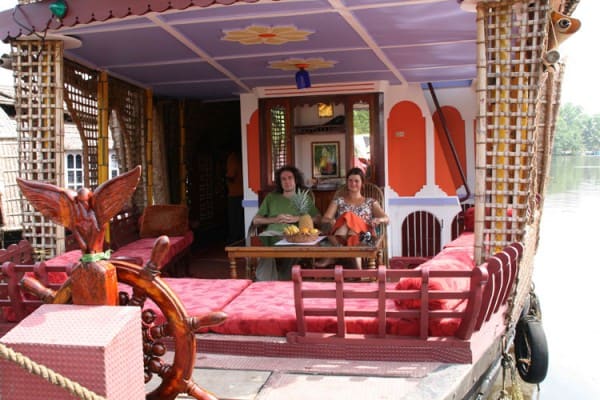
Your daily budget will cover your basic everyday expenses but it won’t be enough for more expensive items. You need to keep a separate budget aside for these extras such as flights or activities. We kept a big ‘fun budget’ aside so that we could learn to scuba dive, rent a houseboat in Kerala, skydive in New Zealand and do many other activities without worrying about our bank balance. We also used this budget to rent cars in Australia, New Zealand and USA; and to stay in some luxurious hotels when we needed a break. Make this budget as big as you can – you won’t regret it.
Have a contingency
It’s also important to keep a contingency for the unexpected, as you never know what might happen.
Track Your Expenses
We started tracking our expenses while saving for travel and continued on our trip. We think it’s the only way to really be in control of your finances, know how much you’re spending, and stick to a budget.
Our RTW trip budget
As an example here’s what we spent for two people on our year long trip. Amounts are in GB£.
| Pre-Trip | |
| RTW Flights | £2,886 |
| Gear | £470 |
| Insurance | £600 |
| Rabies vaccinations | £222 |
| Indian visas | £87 |
| During Trip | |
| Daily budget* | £15,631 |
| Extra flights | £2,523 |
| Fun budget | £6,664 |
| Other visas | £85 |
| TOTAL SPENT | £29,168 |
*Daily Budget Breakdown (for two people)
| Country | Days | Planned Daily Budget | Actual Daily Budget | Total Spent |
| Sri Lanka | 30 | £24 | £24 | £720 |
| India | 90 | £24 | £26 | £2,350 |
| Nepal | 38 | £24 | £26 | £990 |
| Laos | 19 | £24 | £25 | £480 |
| Thailand | 7 | £30 | £26 | £180 |
| Malaysia | 19 | £30 | £30 | £570 |
| Indonesia (Bali) | 27 | £30 | £37 | £992 |
| Australia | 43 | £60 | £50 | £2,163 |
| New Zealand | 18 | £60 | £83 | £1,489 |
| Fiji | 33 | £60 | £63 | £2,068 |
| Cook Islands | 21 | £60 | £78 | £1,629 |
| USA | 31 | £53 | £65 | £2,000 |
| TOTAL SPENT | £15,631 |
Notes on Our Budget
- Actual daily budgets are rounded up or down to the nearest pound for ease, but the total spent in each country is accurate.
- The daily budget is what we spent on everyday expenses including accommodation, food, local travel, internet, and sightseeing. Any major expenses such as flights, expensive activities and the occasional luxury hotel are accounted for separately (see ‘During Trip’ budget above).
- We used World Nomads for travel insurance. They are very popular and reliable but this time we found cheaper insurance with True Traveller which lets you buy or extend a policy when you are already travelling (most companies don’t)—read more about travel insurance here.
- We spent 10 days WWOOFing in Australia where we worked in exchange for food and accommodation so we didn’t spend any money at that time which helped reduce the Australia budget. We later rented a campervan so only had to pay campsite fees for accommodation.
- In New Zealand we upgraded our accommodation and stayed in apartments or motels so our budget was higher than planned.
- In the US we stayed with family and friends much of the time so this reduced our accommodation expenses, but we didn’t watch our spending too closely as we were near the end of our trip and still had money in our bank account.
We managed to save a lot for our trip (read How We Saved 75% of Our Income To Travel ) so we didn’t have to worry too much about what we spent. You could do this trip on much less but we chose to take advantage of all the activities on offer, including lots of scuba diving.
What if you don’t have a plan?
This budgeting technique worked when we had a good idea of where we were going in the year time frame. But what if you have no idea where you are going or how long for? This is the position we are in now. We don’t have a plan this time, except that we want to travel for as long as possible. We can’t budget for this, but we’ll try to travel as cheaply as possible (read How We Plan to Travel Forever) and always keep some emergency money aside.
Update: You can find how how much we spent during our first 3.5 years as digital nomads here.
For tips on how to deal with money while travelling read how to manage your finances when you are on the road.
If you enjoyed this post, pin it!

8 years later and your articles still hold true. Your advice is simple and clear and your honesty and transparency of information provided has certainly helped us in working out if we can and want to travel full-time. So thank you.
We too are starting to publish our travel costs, by country, to show that it can be done. Everyone’s style and level of comfort is different so it pays to check out various sources before heading to a country.
We will remain in New Zealand until November and then plan to head to Europe for a year. As part of our planning, we’ll come back and check on your site for more information.
Thanks Paul and good luck with planning your Europe trip. That sounds exciting!
Great post! It’s really helpful to other travellers to see budgets broken down so well. My husband and I have always travelled slowly – we know it takes at least a month to ferret out the hidden gems of a particular location. We love going places where our dollars go further as a result.
Hey guys! This is a really good comprehensive article. Budgeting for extras is a big thing for us. As cheap as we get our daily budget down to, those expensive activities can really bump our weekly or monthly budget up high. Great article!
We Are doing a two month cruise from Florida thru Panama Canal and around South America…I would Appreciate ideas on packing for that length of time…and various climate/temperature situations.
My wife and I want to go to India for 5 months this October, we have no idea where to start, which city to arrive in, where to go, what to do, but we know we want to go to India for sure. Ay advise, we love the house boat you rented, that looks like it was a lot of fun. Our problem is we do not want to be bored or ripped off, traveling around in South East Asia, Thailand and Philippines, we found you really have to watch what your doing, and learn who to trust and who not to trust, we have been scammed a lot, mostly in Philippines, not so much in Thailand. But what about India?? I hear it is the best and worst place for a westerner to travel!
ADVISE PLEASE!!!
Hi guys, my bf and I are currently looking for insurance for our trip. We don’t have a return flight and anticipate that we’ll be gone for longer than 18 months. We’ve had a nightmare searching for policies that allow you to claim while you’re abroad – the only ones we’ve found are World Nomads and Globetrekkers. Also, many policies won’t cover us if we don’t have a return ticket home. Didn’t you have the same problems with Multitrip and Photoguard? Or did you figure out a way to get around this?
We did have the renewal problem with Multitrip but were able to renew Photoguard. We now use this company: / who should work for you if you’re from the UK.
Thanks for the link guys. With regards to your electronics cover through Photoguard, does this allow you to claim while you’re abroad? Have you had to use it at all so far?
We haven’t had to claim so can’t say for sure but we hope so.
Simon,
Do you think a couple get by in South Amercia & Asia on £1,600, i.e. $2,400 per month including renting small apartments ?
Thanks
Colin
Yes I think that will be fine especially if you travel slowly- you can afford nice apartments for the same price as a cheap hotel if you commit to a month.
Thanks Erin, great tip :)
Best of luck with the app, hope it goes well for you, will probably buy it :)
Hi Erin
Great post, thank you. Me, my wife and a friend are setting of travelling in Asia in a few months and money is one of my biggest worries. Part of the problem is none of us are very naturally money/budget conscious and we’re going to be going from a fairly well off life style to a very money constrained one.
I was wondering if you had any tips on the practicalities of budgeting, for example, when you say you have a daily budget, how do you ‘manage’ that? Keep all your receipts and then reconcile each day? Each week?
I’ve started writing down all my spending in a little day to day diary by way of getting into a habit. Do you think that’s a good way to go? Somehow it doesn’t feel right.
Any thoughts welcomed!
Thanks again
Lewis
Hi Lewis
I keep track of everything we spend and enter it in a spreadsheet organised by country, day and category (food, accommodation etc). Usually I can just remember but if we are out all day and spending a lot I’ll jot it down somewhere. Simon is actually working on an iPhone app to track expenses for travellers.
We don’t really have a daily budget anymore but when we were on our RTW trip with a limited budget we did. I would look at it each day but also on a weekly basis so if we overspent one day we’d try to make up for it another. Having a contingency is always a good idea!
Wow, now THAT is what I call a useful post! I usually go on short trips, but I plan to travel long-term and this post will definitely help me prepare for my trip (especially actual daily budgets).
Glad you found it useful Anne.
Accomodations was per room not per person, am I correct?
That’s right.
You should ask those insurers for affiliate codes, I read this post 4 months ago, remembered it, and returned today to buy insurance policies with both of those companies based on your recommendation :)
Good idea! Glad you found the info useful.
Wow! I think you’ve done amazingly well to budget for all of that, to see so many countries, and have a wonderful time as well. All very sound advice from a couple who have planned ahead so well and actually done it. Well done guys!
Thanks for sharing all of this priceless information! It makes long-term travel seem much more do-able!
That’s good to hear!
I wish I could be as systematic as you when it comes to budgeting for a trip :) Nonetheless I don’t think I did too bad on my Asian trip. I see that you did not go to the Philippines which I think is a shame. The beaches there are totally worth it, especially Palawan. Crystal clear waters and powder white sands and quiet too. Very relaxing escape of sorts. You should check it out next time.
The Philippines is definitely on our list for when we go back to Asia. Sounds wonderful!
Be careful in the Philippines, wonderful people, but Manila especially is a huge rip off place, everybody, and I mean everybody lies to you, takes you to hotels you never asked them to take you to, you have to be on guard at all times, very stressful, we were down South in Dumugette, which we liked because we found a family to hang out with and spent a lot of time with them, which made things easier, less rip offs when you get out of Manila. Strangely in Bangkok and the rest of Thailand we did not have as many problems with rip offs, maybe Philippines is more desperate, not sure. Also Philippines is a lot more dangerous, and very hard to get around in, buses are horrible, they stop everywhere, and sometimes for no apparent reason, when you buy an “express ticket” for an express bus, sometimes they put you on the normal bus, which can be hellish, if they break down it can take a long time to repair, often no spare tire (if you can believe it), we found Thailand way better to get around in. More organized, and much better food, Thai food is awesome.
I would find a person in the Philippines to be your guide, maybe a different guide in different places, it really helps, and you would not have to pay that person much really. Good thing about the Philippines is everybody speaks English, but don’t expect any help from the police, often they are in on the scams!!! Maybe Thailand is the same, but we never had problems in Thailand, but lots in the Philippines.
good travel tips. i can share this to my family sure they will like it.
Very informative.. thank you for sharing this post!
.-= Xpat´s last blog ..How We Were Kicked Out Of The Park? =-.
Glad you found it helpful. Good luck with your travel plans.
The “multiply by 3” rule sounds like a great idea. We’ll be sure to use this tip when we budget for our around the world trip that we start in less than 2 months!
When you get the chance, check out my latest post titled: “How We Saved Enough Money to Travel the World!”. In this post I have laid out all of the money saving tips and tricks that my girlfriend and I personally utilized to save for this trip. Let me know what you think!
Safe travels!,
Ryan & Liz
http://www.pausethemoment.com
Great post, I will pass this on to my family. Great way to clearly plan out expenses. We are off to Cambodia in a few months and will use the same model, accom by 3 sounds fair!
Enjoyed reading about your adventures
Frank
Glad you found it useful Frank and good luck planning your Cambodia trip.
What a great idea from Christine to multiply it by 3. I’d say it definitely works out to be 1/3 depending on what you do that day, obviously tours or going out drinking push the budget.
Yes it is great for getting a rough idea. The ‘fun budget’ can cover all those extras. Hope you are enjoying the start of your trip Ayngelina!
.-= Erin´s last blog ..How to Budget for Long Term Travel =-.